Hall of Histolysis
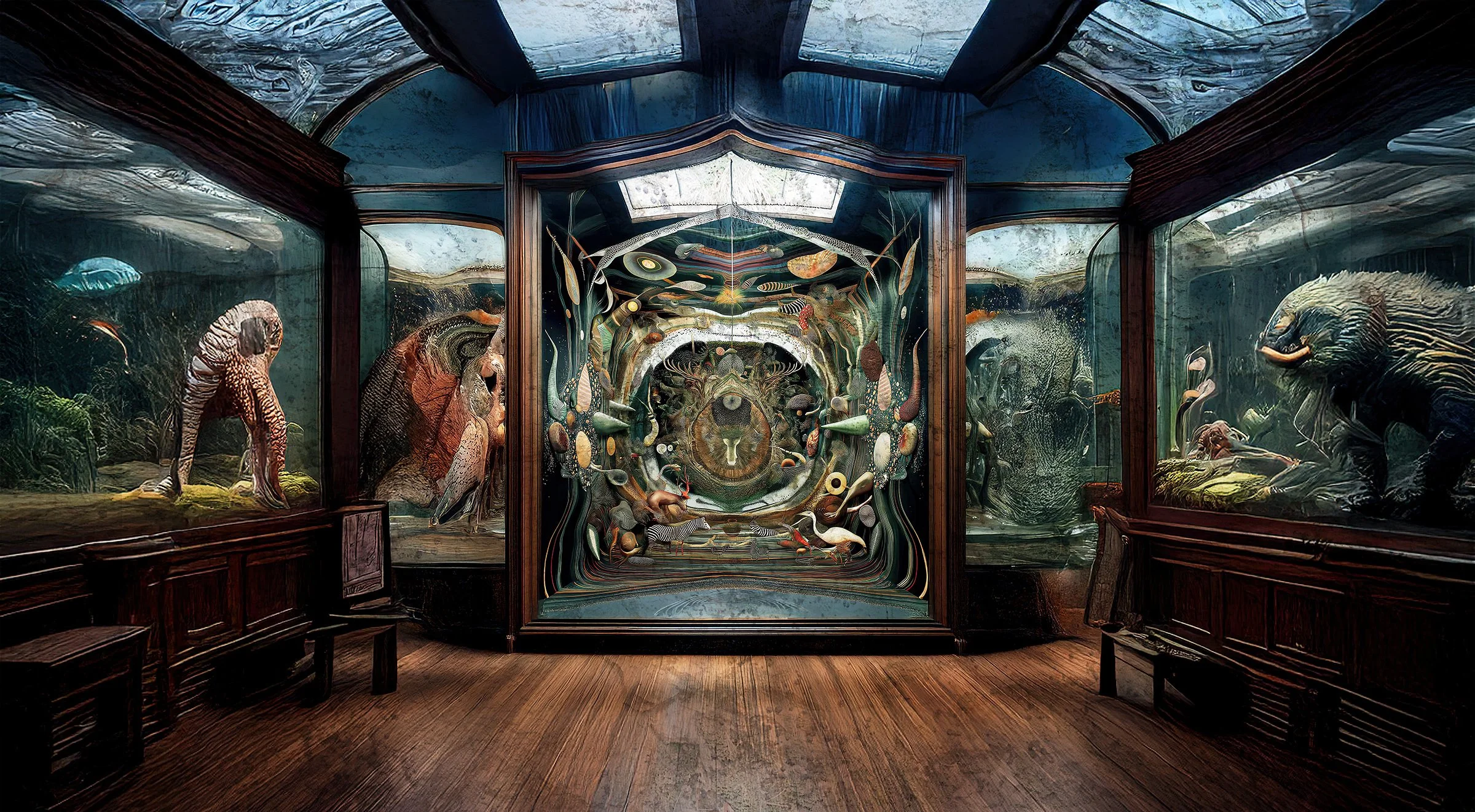
Formerly classified under the Linnaean heading Cryptogamia, flora and fauna in this wing struggle to migrate through nine (subterranean) kingdoms of autopoetic transmogrification.
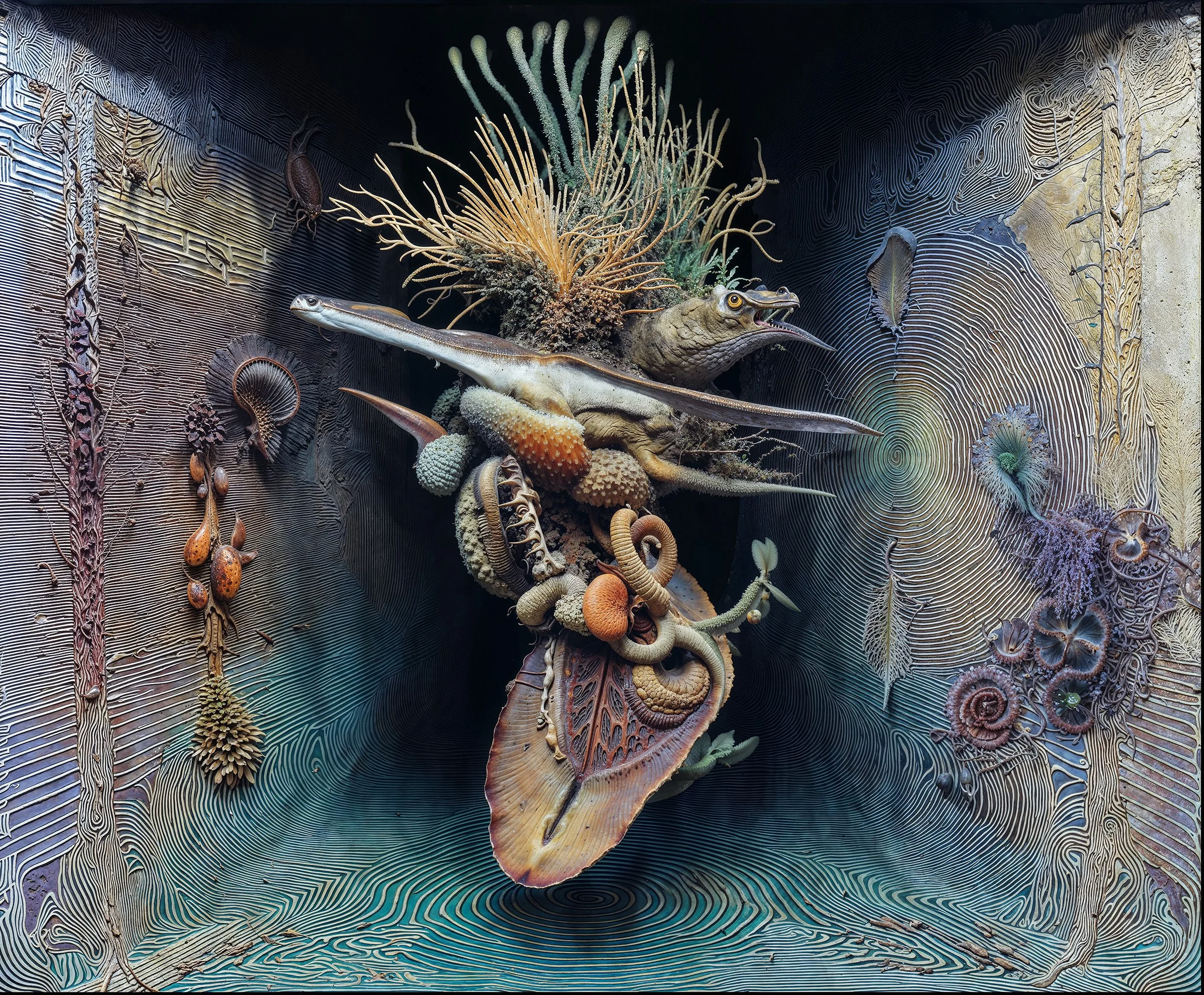
Here, low-frequency vibrations detected in the xylem transpiration stream reveal currents of thought delivered via networks of aerial roots.
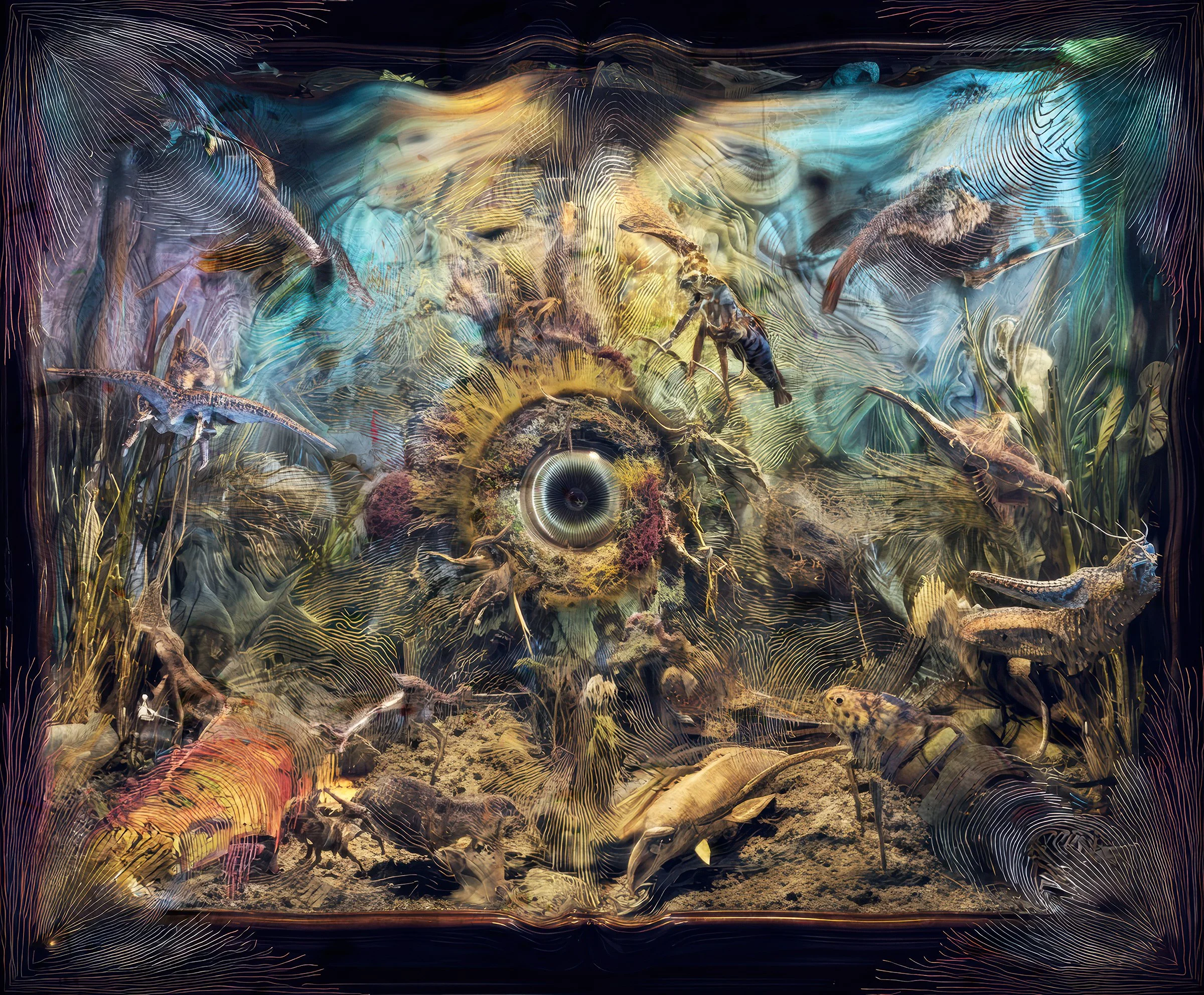
The molt is (still) ongoing. It has been ongoing since May of 1812. The emerging ecotope is patient, awaiting the awakening of the pneuma portal.
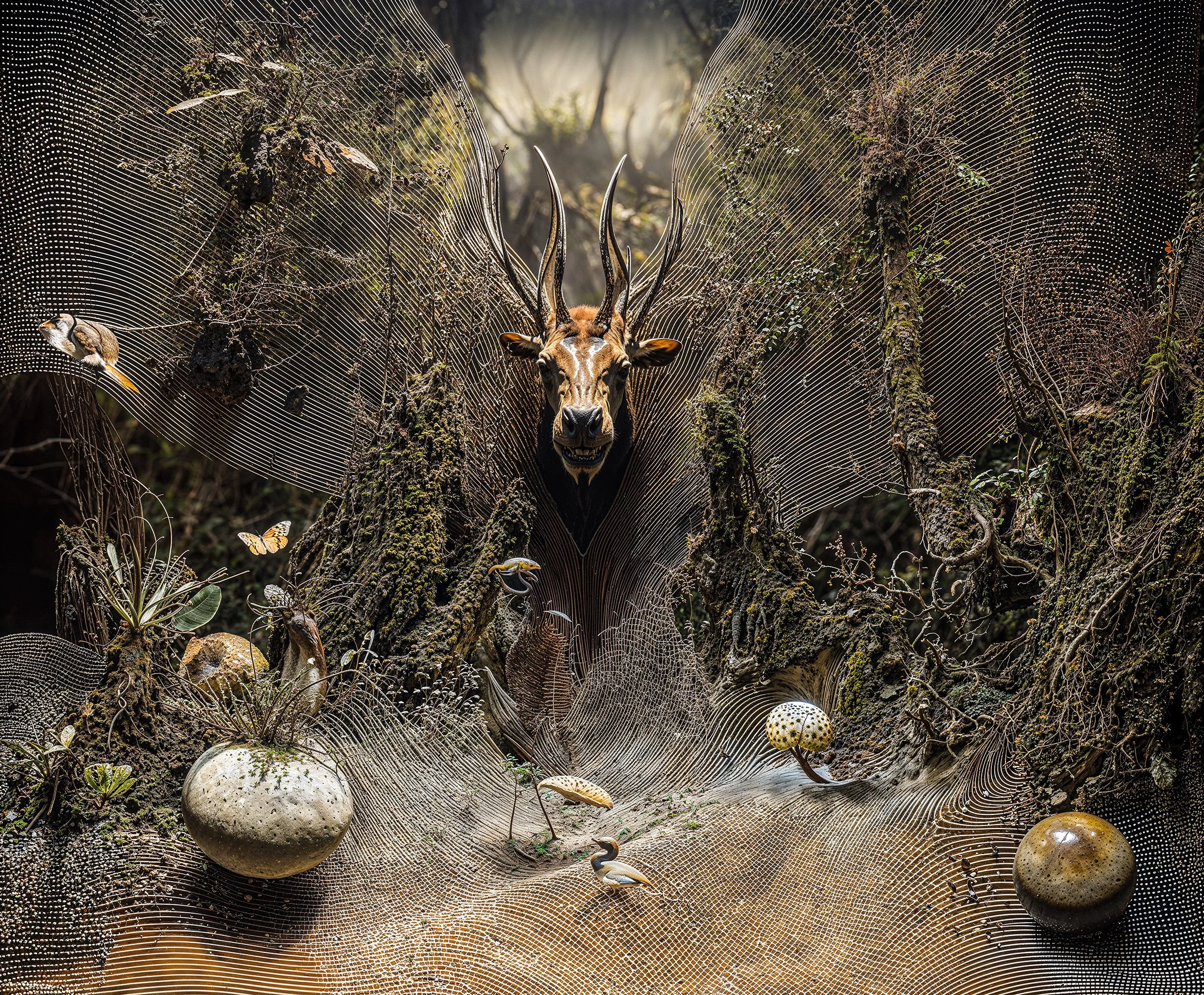
Nocturnal camera traps have recorded a slow rotation of the head of this "Loki baby," approximately two degrees per month, toward the east-facing windows.
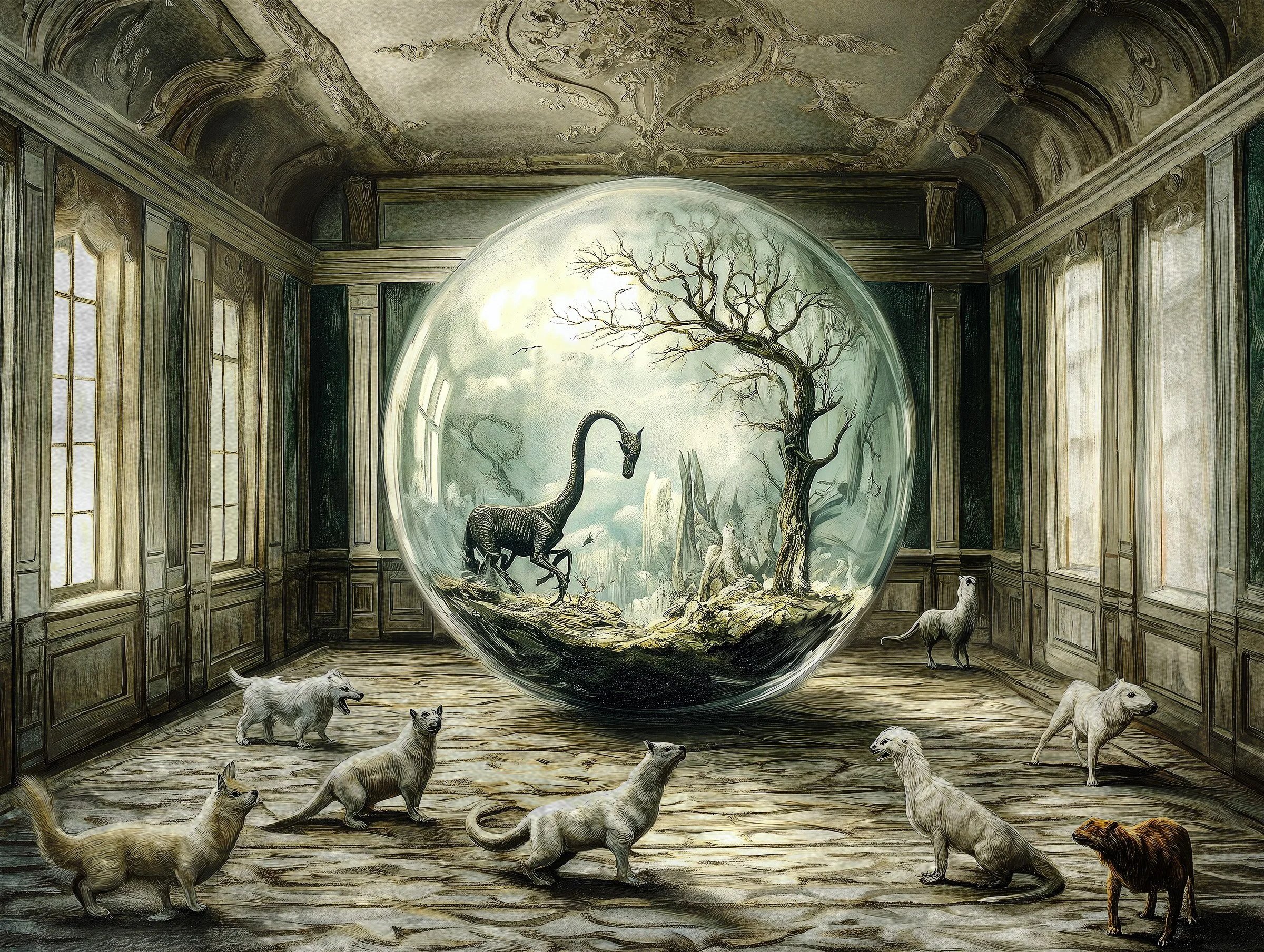
Move close to the demon globe, inhaling slowly, deeply. Notice how the scent, recorded in the 1879 inventory as "camphor, with an undertone of warm graphite," is still detectable.
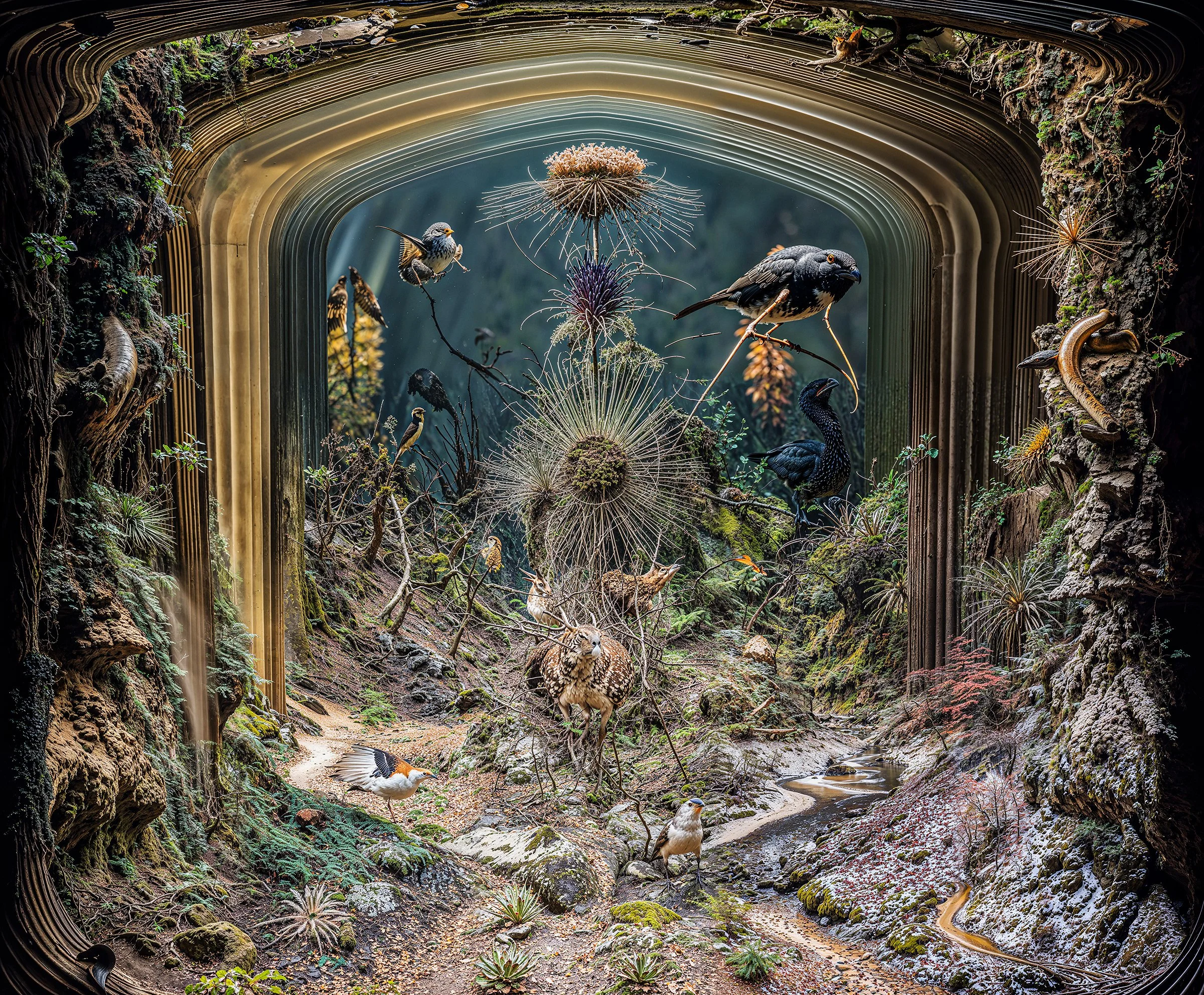
This diorama (an earlier model fashioned by Oblates in a lost sect of the burnt-over district) appears to have developed its own interior climate — a microseason — in which the specimens flourish according to a calendar still unintelligible to our curators.
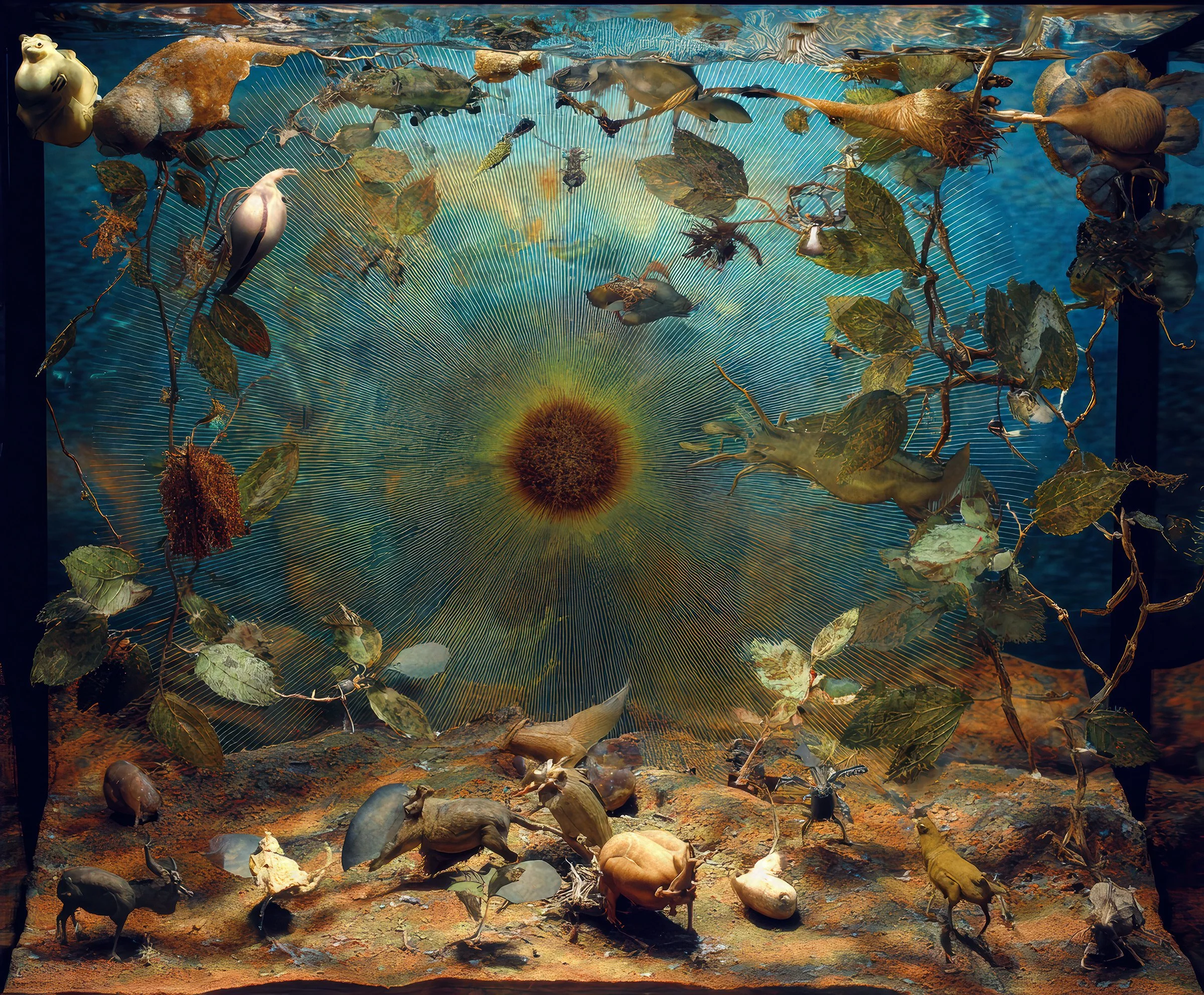
Origin of the "Li'l Eye of Horus" is unknown; it appears briefly during the Sleepy Worm moon phase.
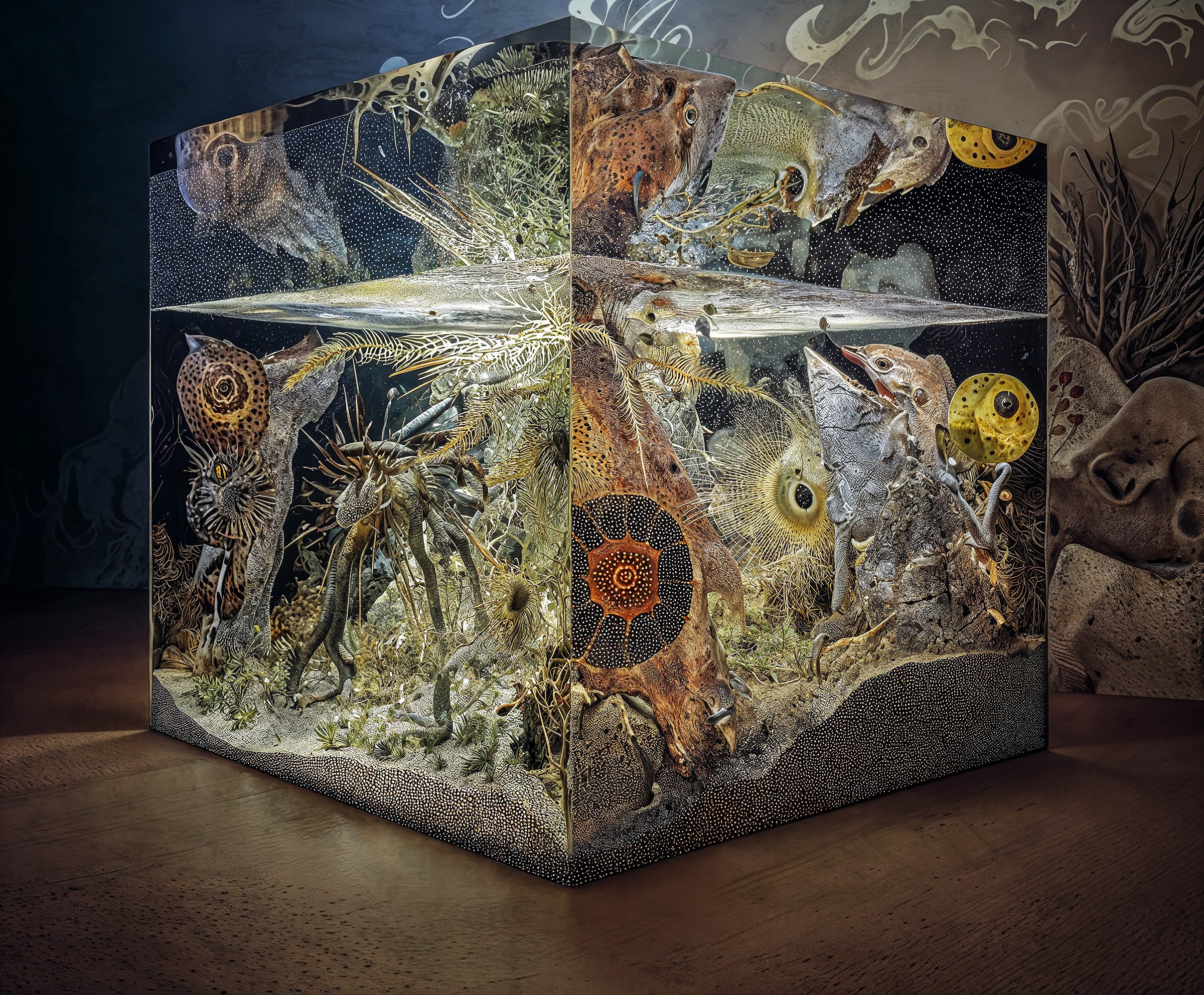
Accession no. 1887.IV.23: this Wardian Case, was delivered in a state the curator described only as "ontologically unrealizable."
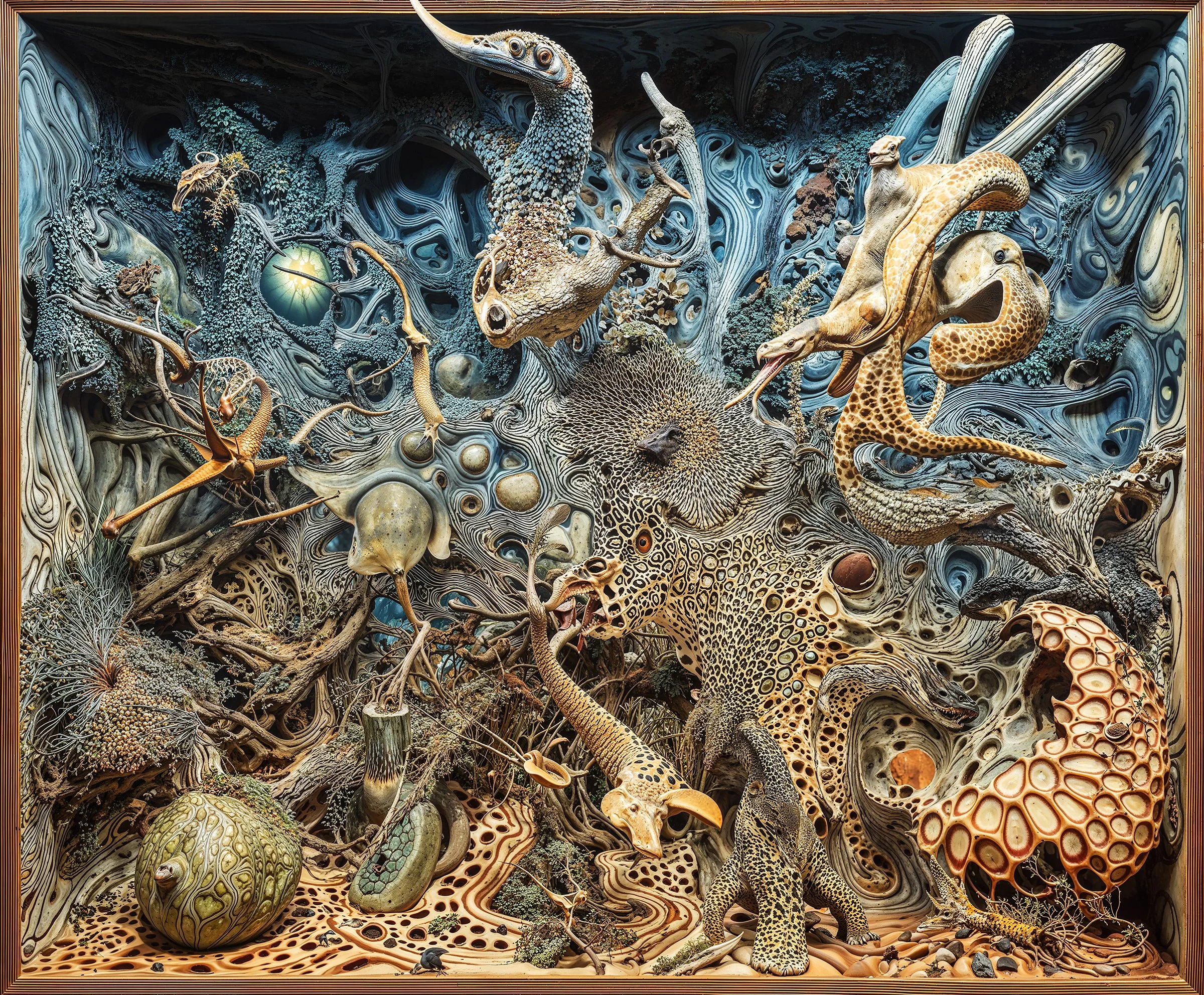
What was catalogued as damage is now believed to be a form of Kaminesque autoscreelia, manifesting in the petrified chitin during an unobserved period of disputed wakefulness.
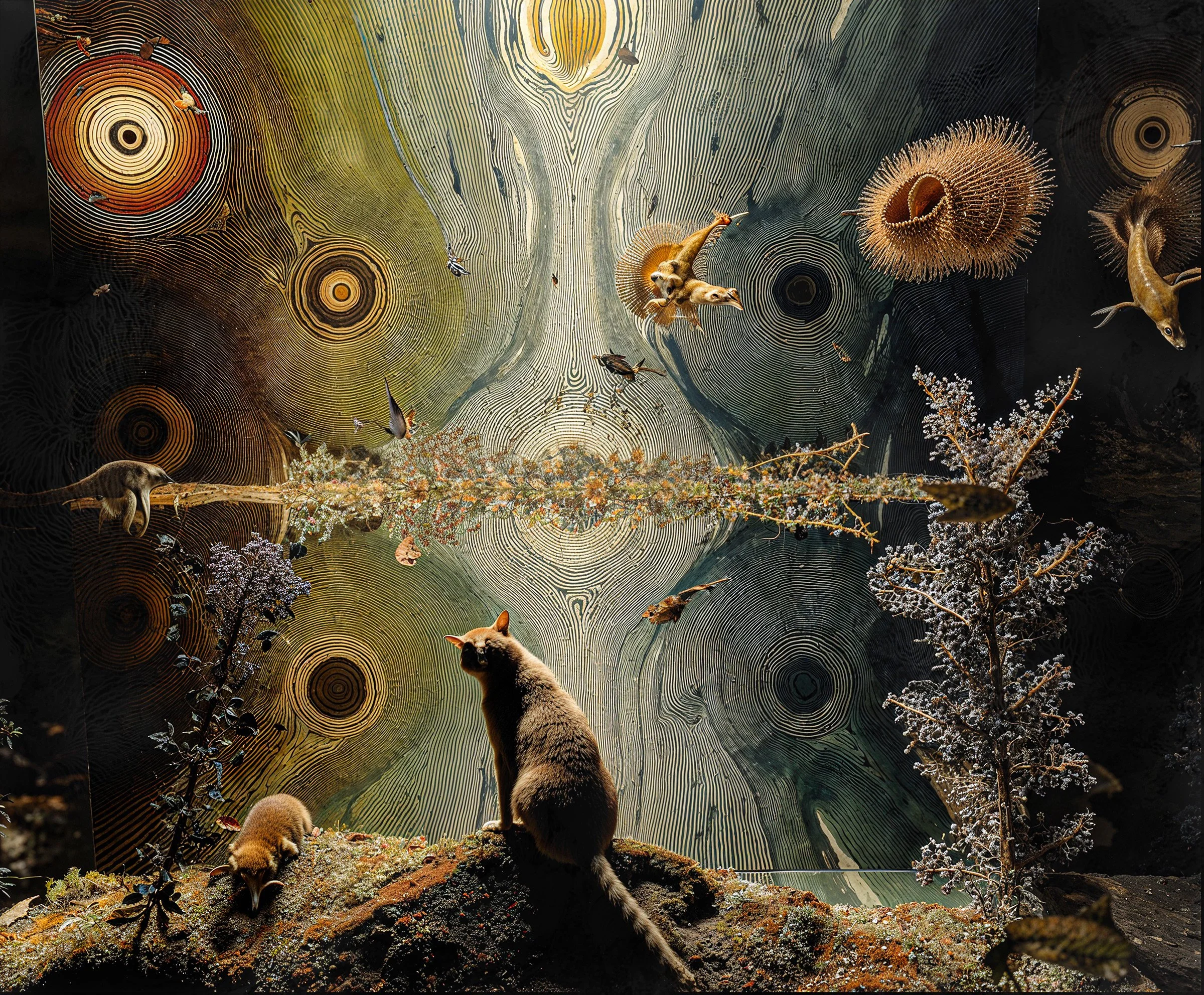
Ruth, our museum's cat, named after Schrödinger's daughter. Spotted here in a rare thermograph, she has yet to be seen in the flesh.
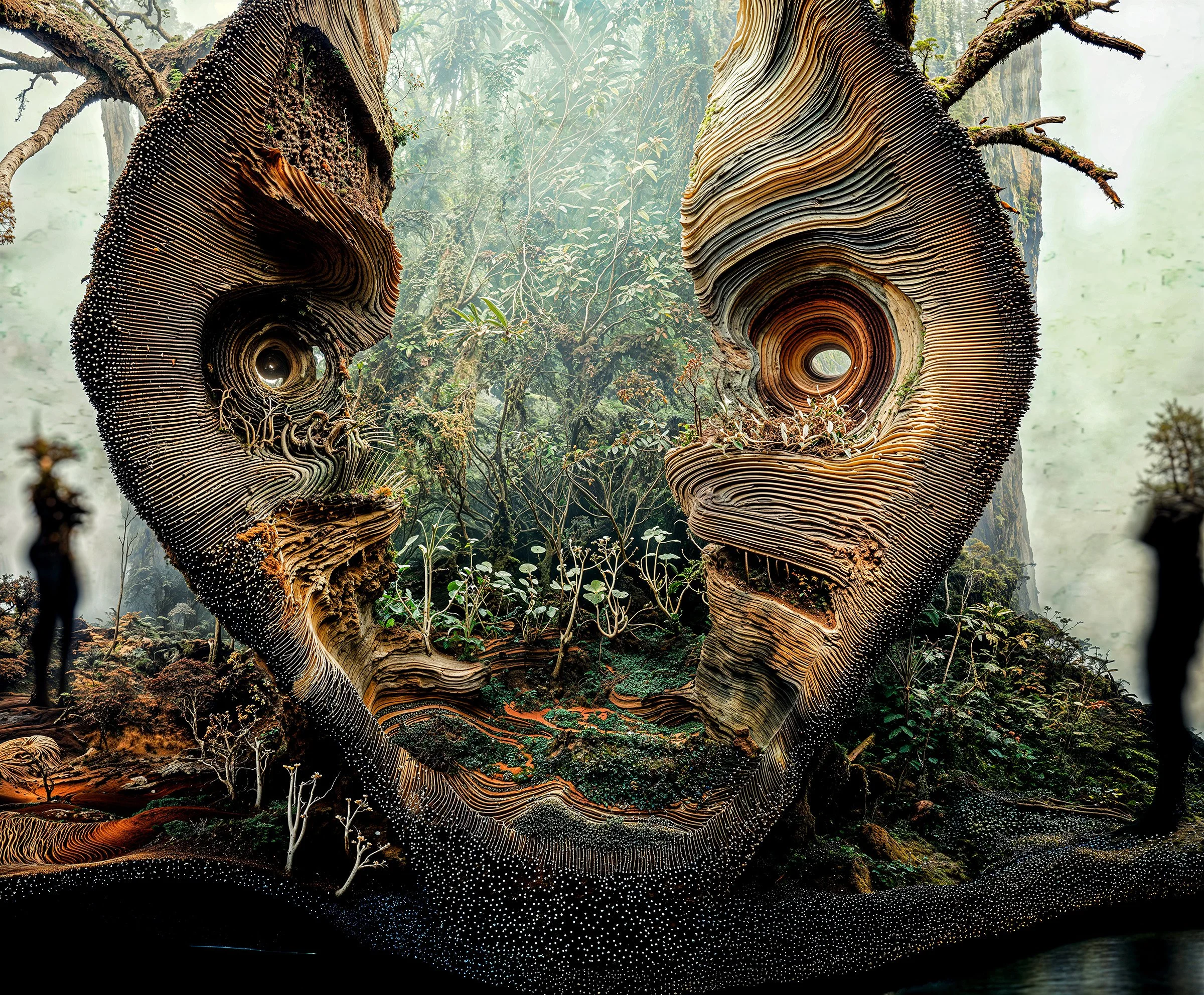
Due to vegetal drift and a possible Tobacco Mosaic Virus, the Green Man Gate remains closed to the public until further notice.
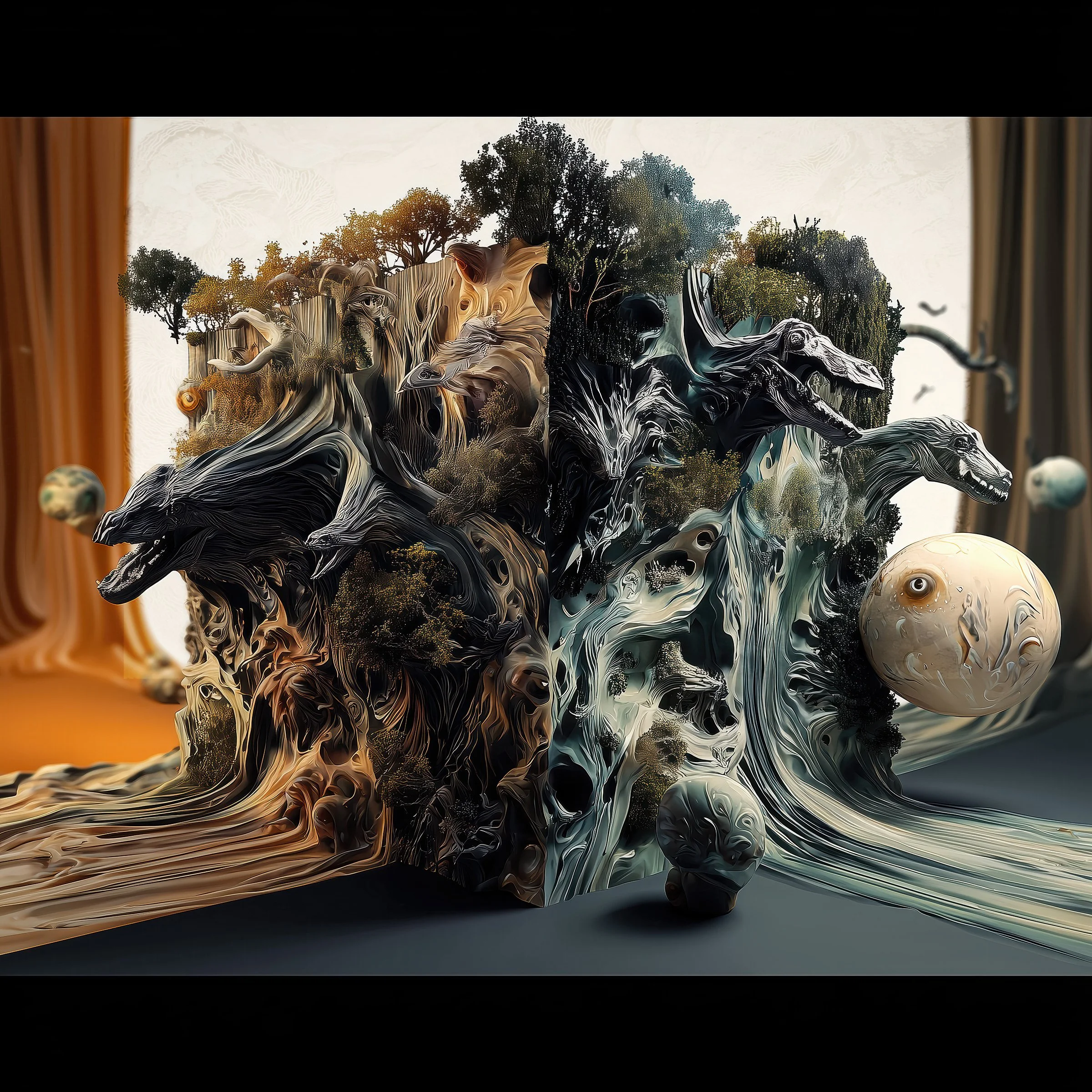
Phlogisticated air trapped in the basal chamber has produced ossification manifesting at the binary threshold, that is, at the precise moment the eye ceases to focus.
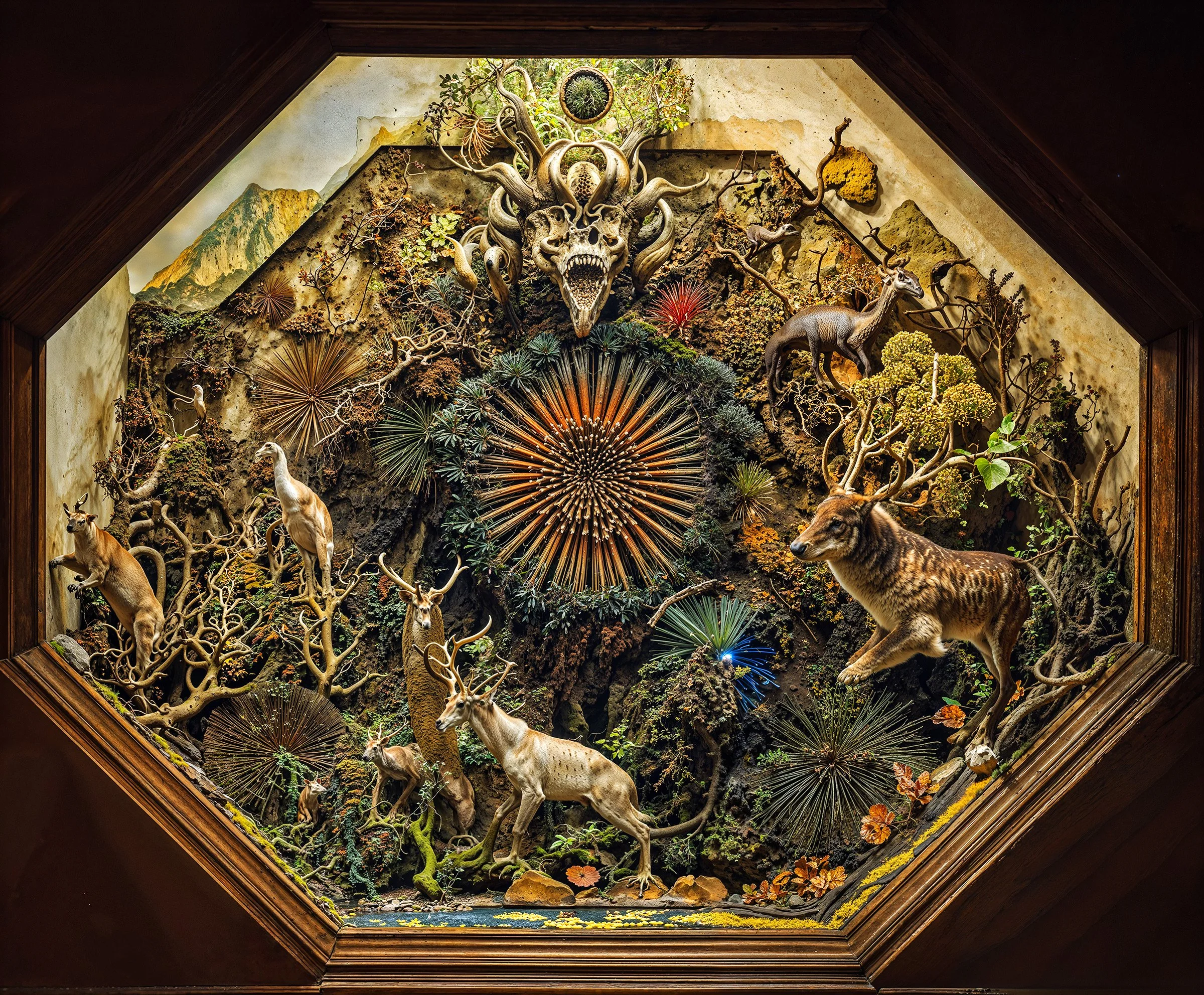
When morphogenetic fields cross-pollinate, they can effect a carousel of palingenesis--the recapitulation of ancestral forms.
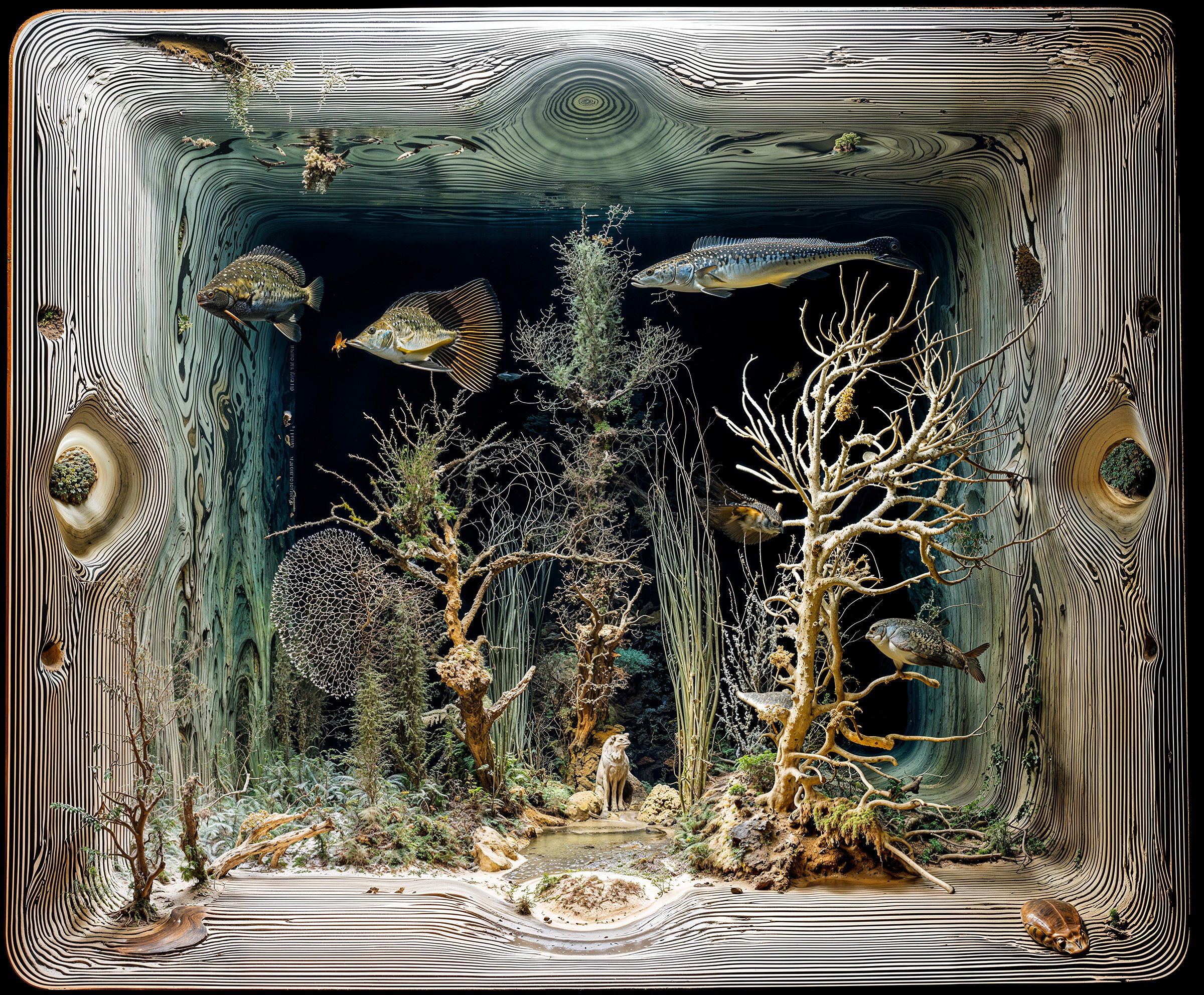
Gemmules — Darwin's hypothetical units of heredity, later discredited — would account elegantly for the specimen's tendency to regenerate in the style of fabulist species.
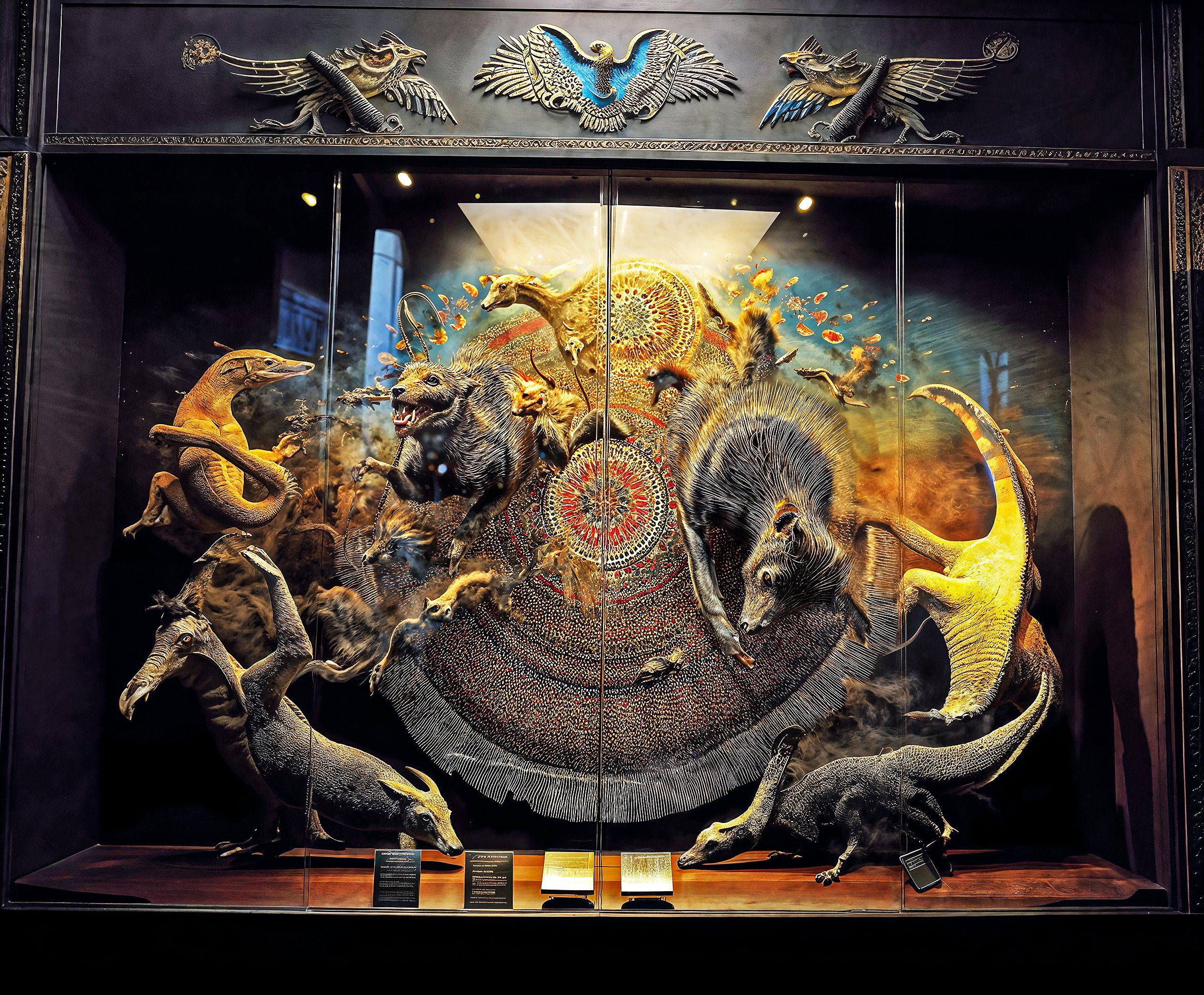
Miasmatic theories, long abandoned, find a strange second life here: the specimen appears to influence its interior "neighbors" through proximity alone, without contact, without mechanism.
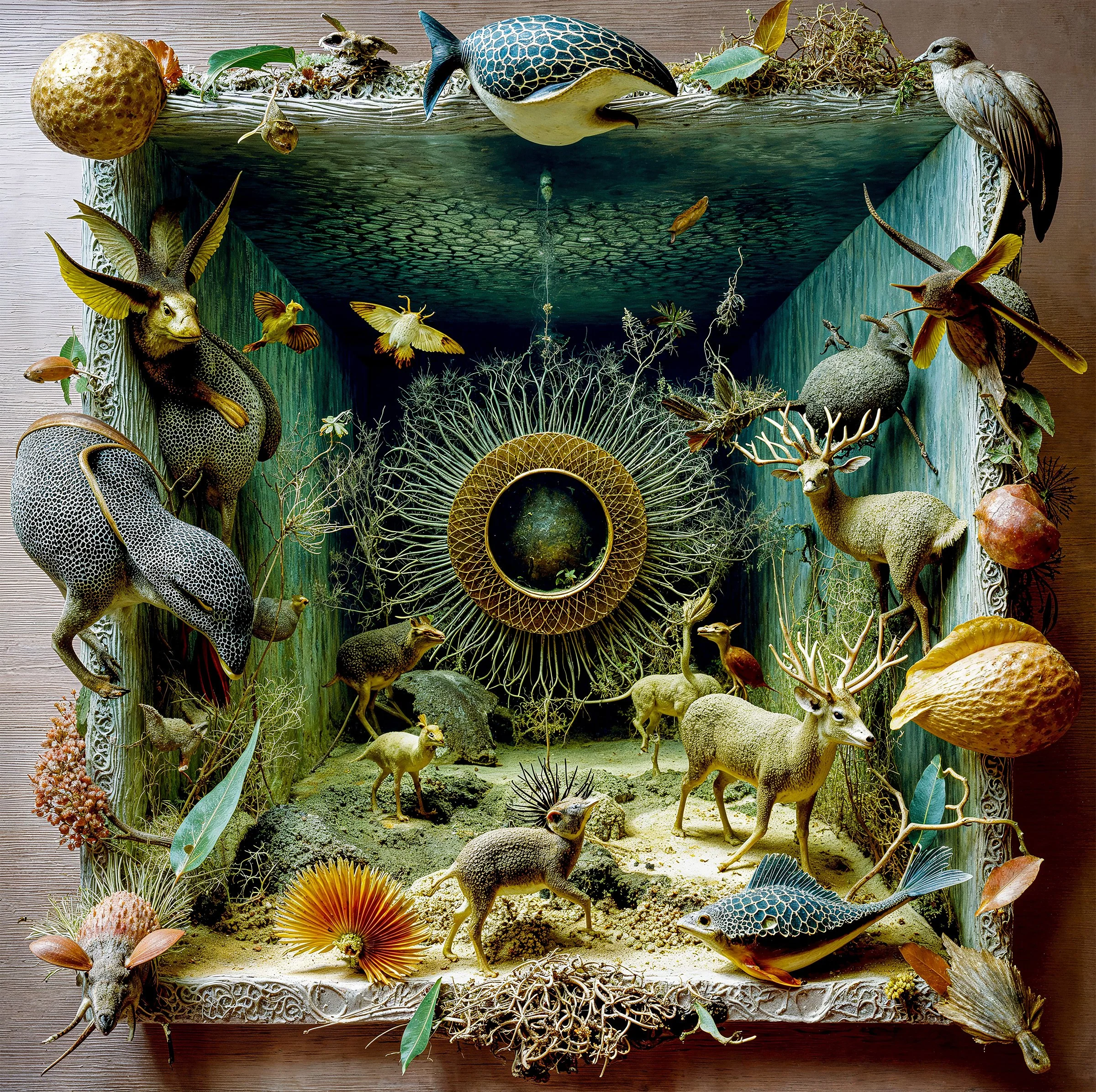
A faint effluvium, described in the original accession notes as "sweetish, not unpleasant," persists despite the vacuum of the vitrine.
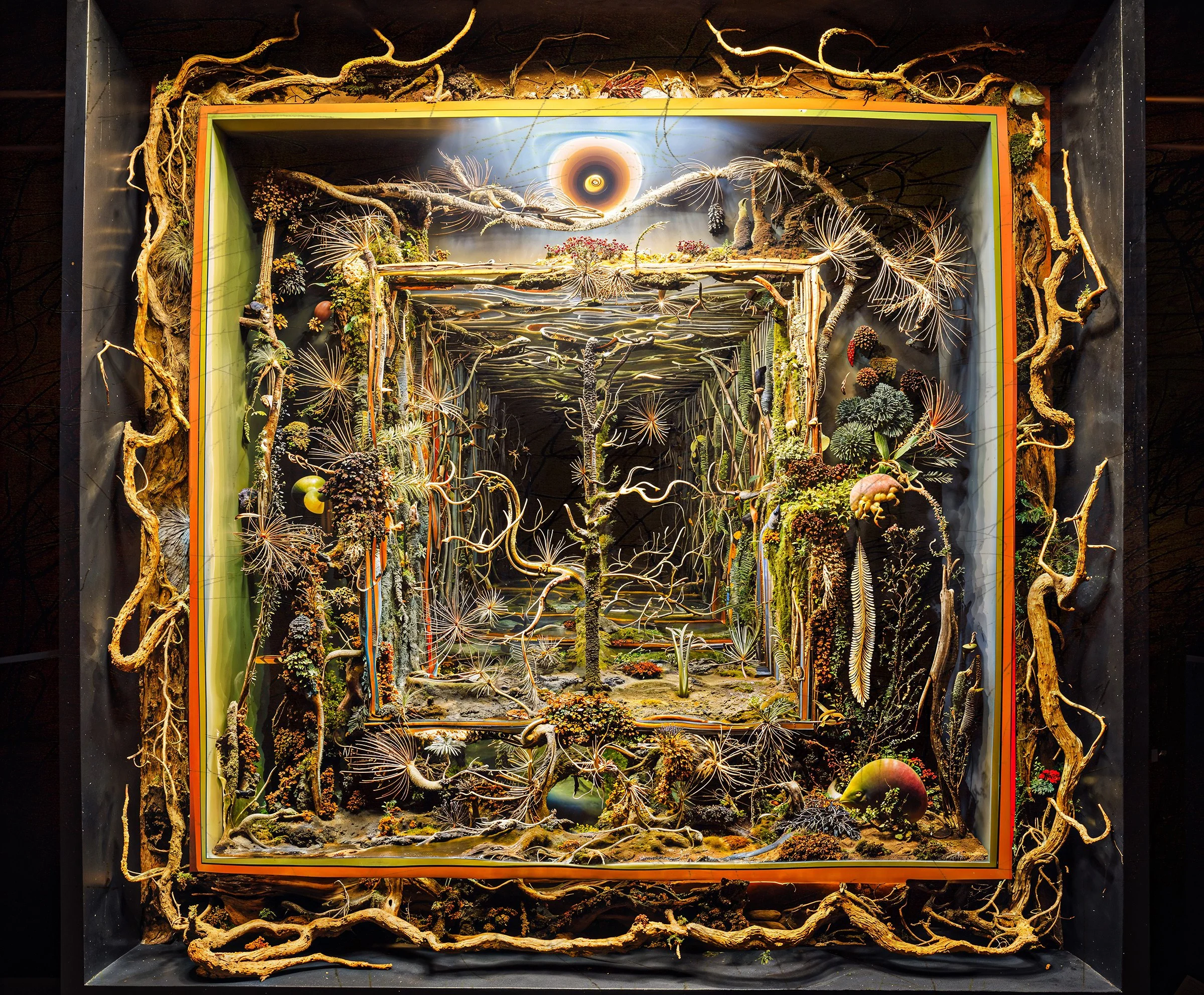
Fool's gold filaments extend beyond the edges of the framed composition, suggesting the tableau continues to negotiate its own boundaries in the absence of supervision.
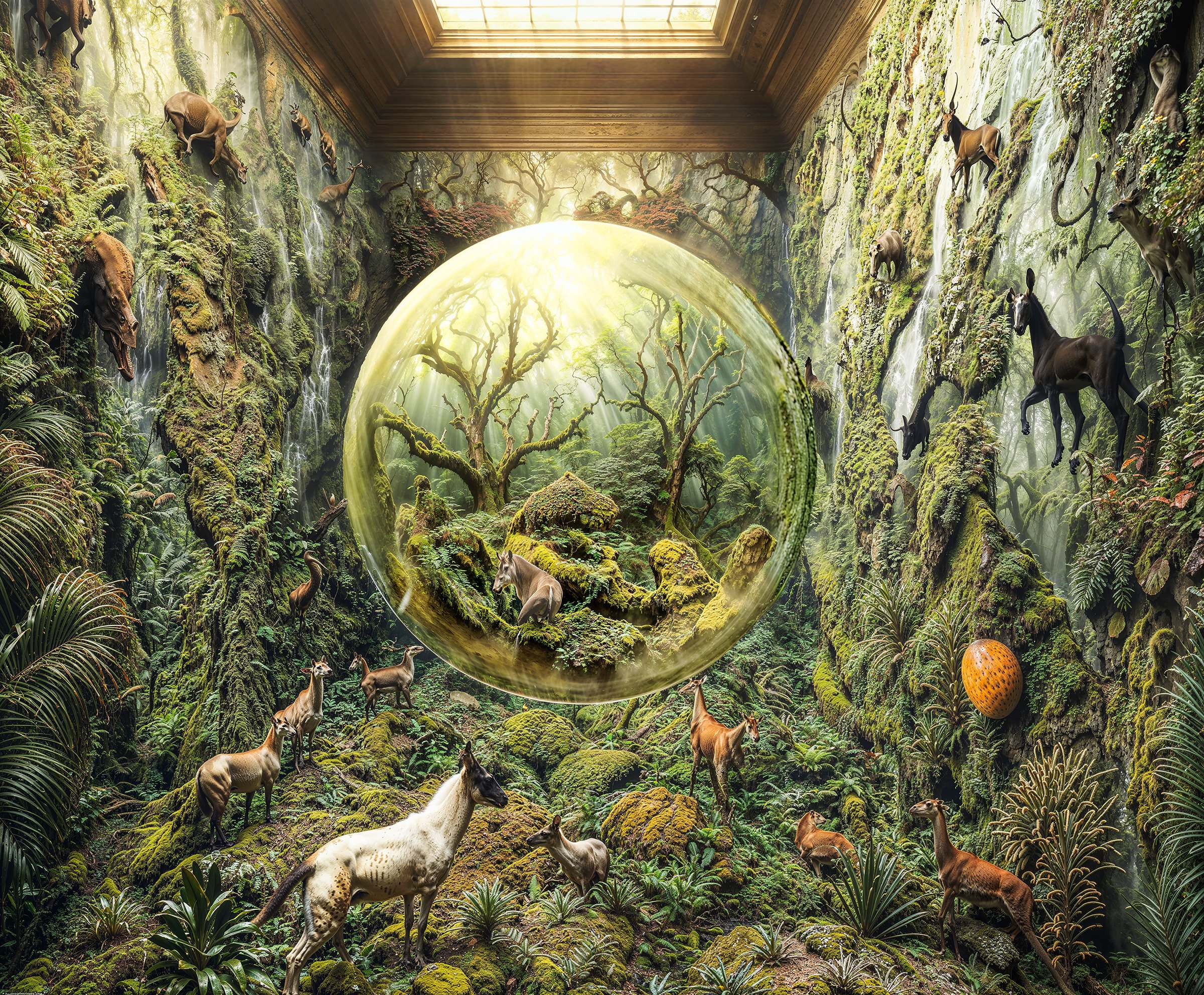
What the collector recorded as "a kind of vegetable pulse" is now attributed to residual peristalsis in structures that should, by all accounts, have calcified.
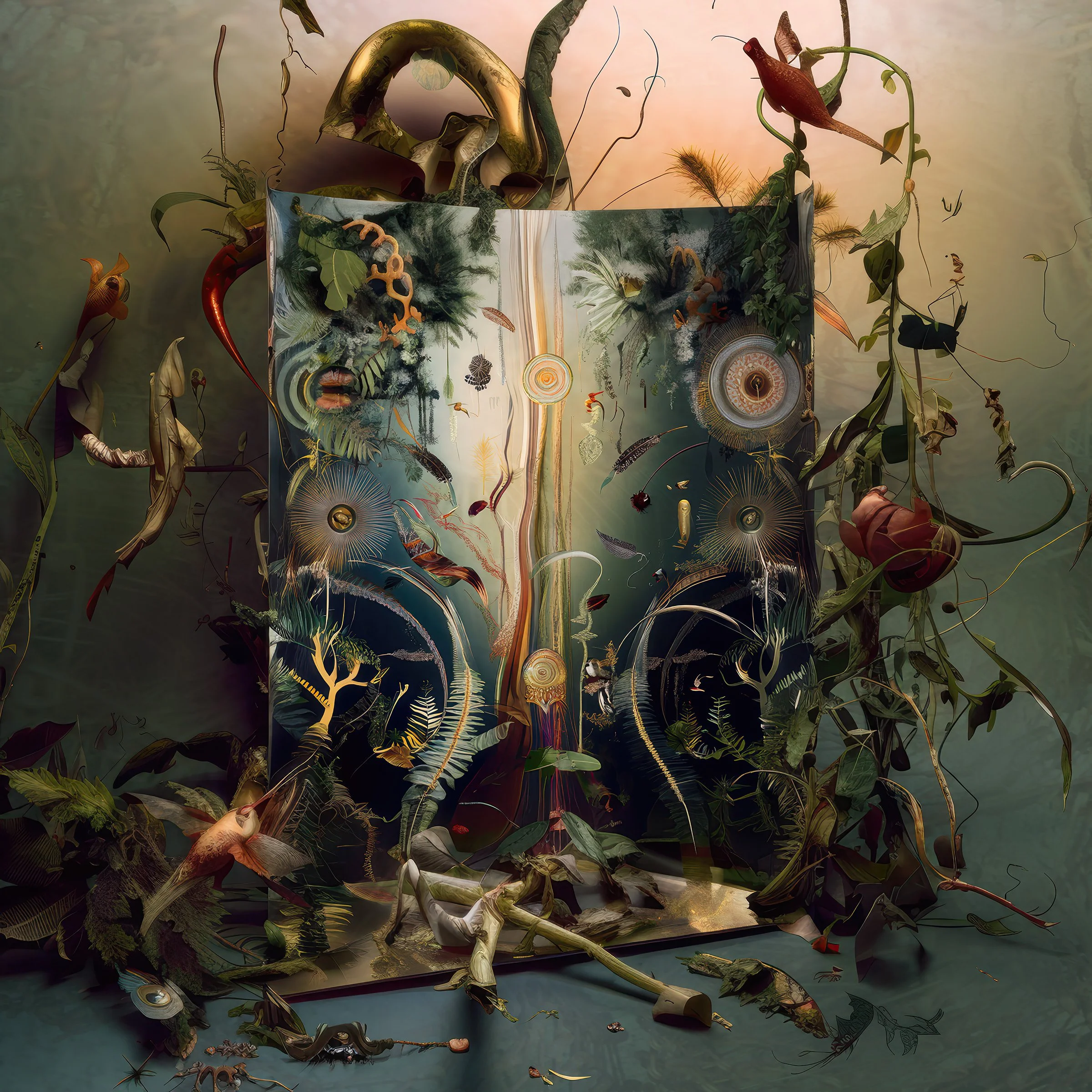
Within this resinous matrix curators have recently discovered fragments of an earlier exhibit: shards of painted savanna, a wire armature, a miniscule glass eye rotating approximately south-southeast.
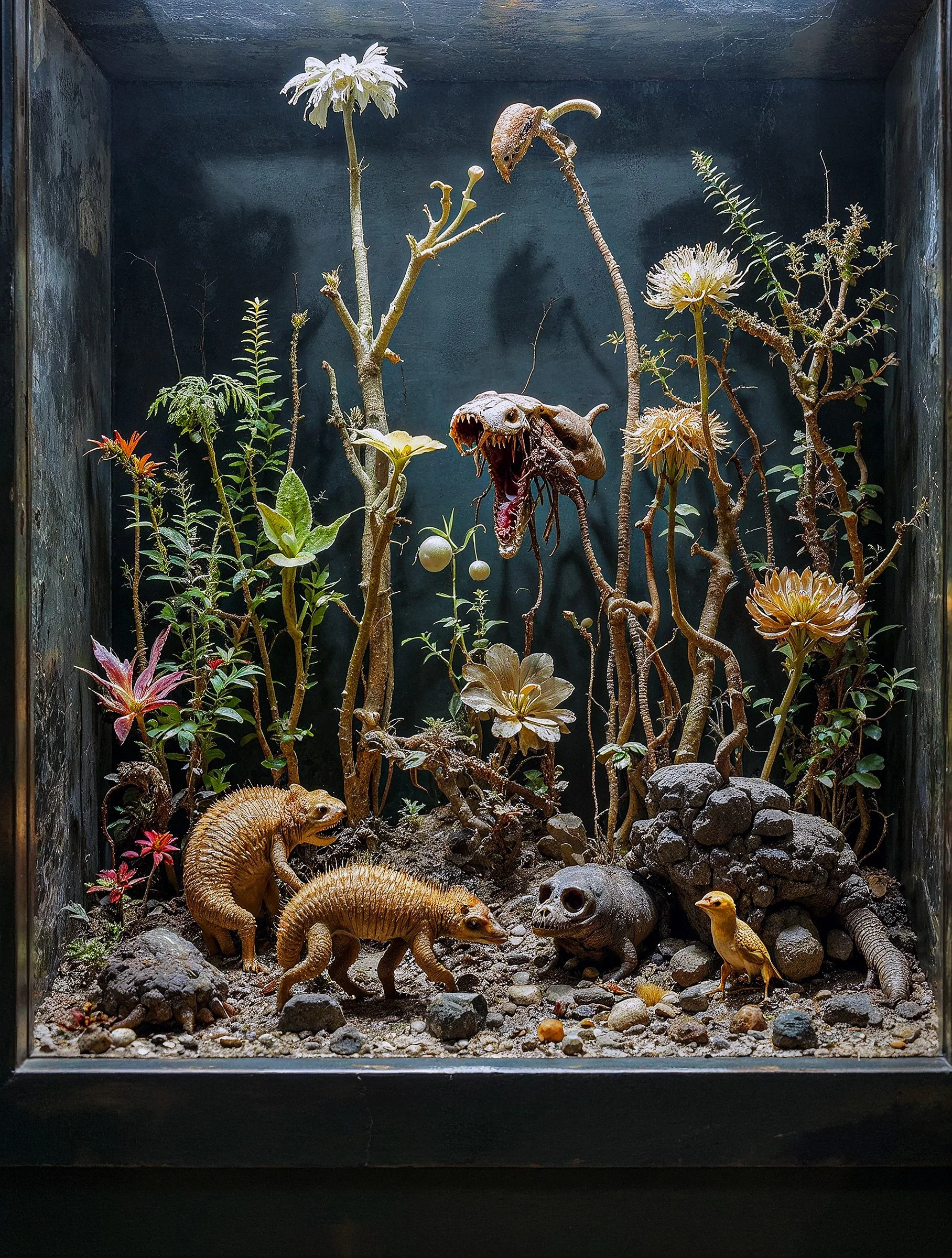
A gift of unknown provenance by an anonymous benefactor, this diorama refers to "The Second Devonian Coming."
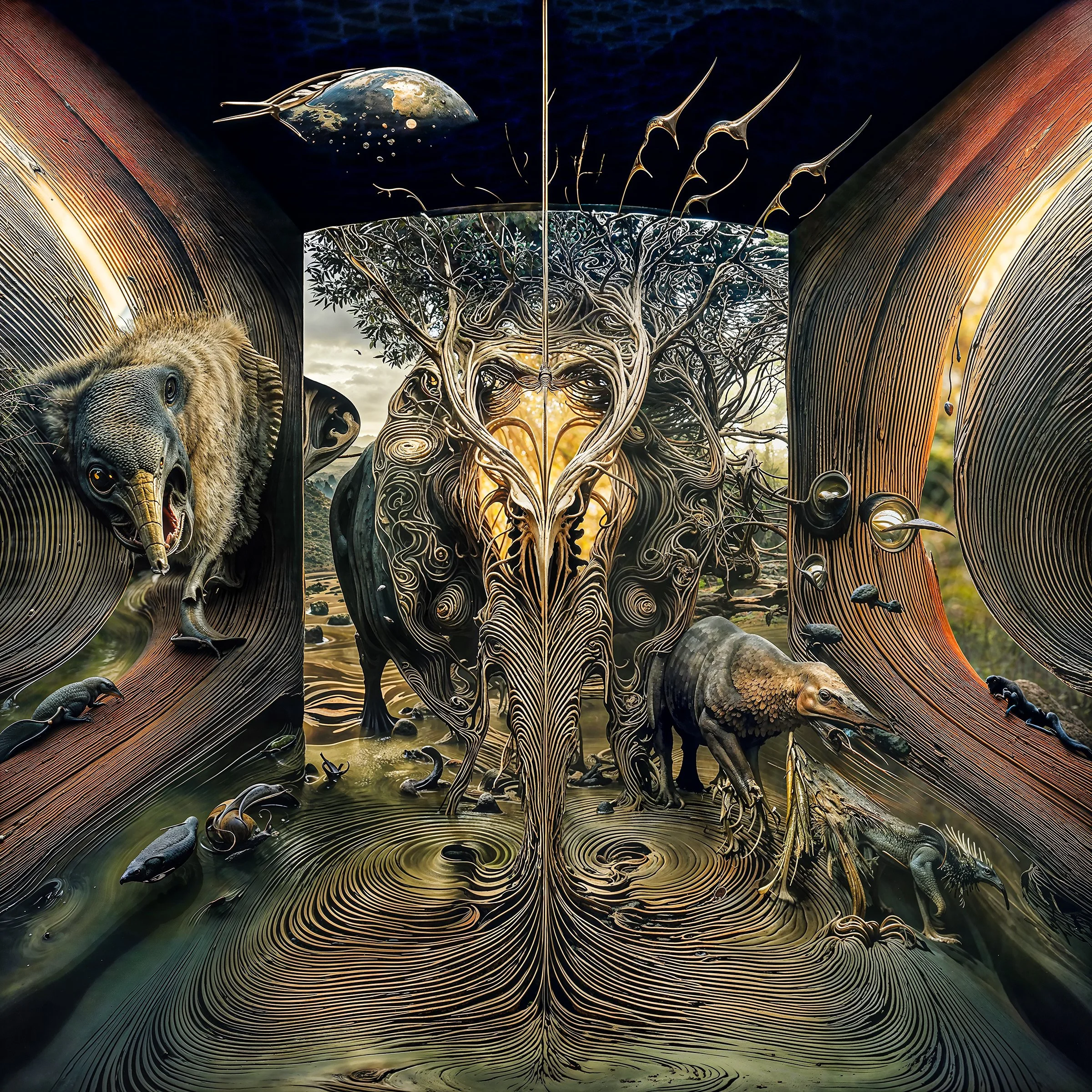
A psychopomp referenced in various Lemurian cults as a "yoker", a conjoiner of psyches cycling backwards and forward through geologic time.
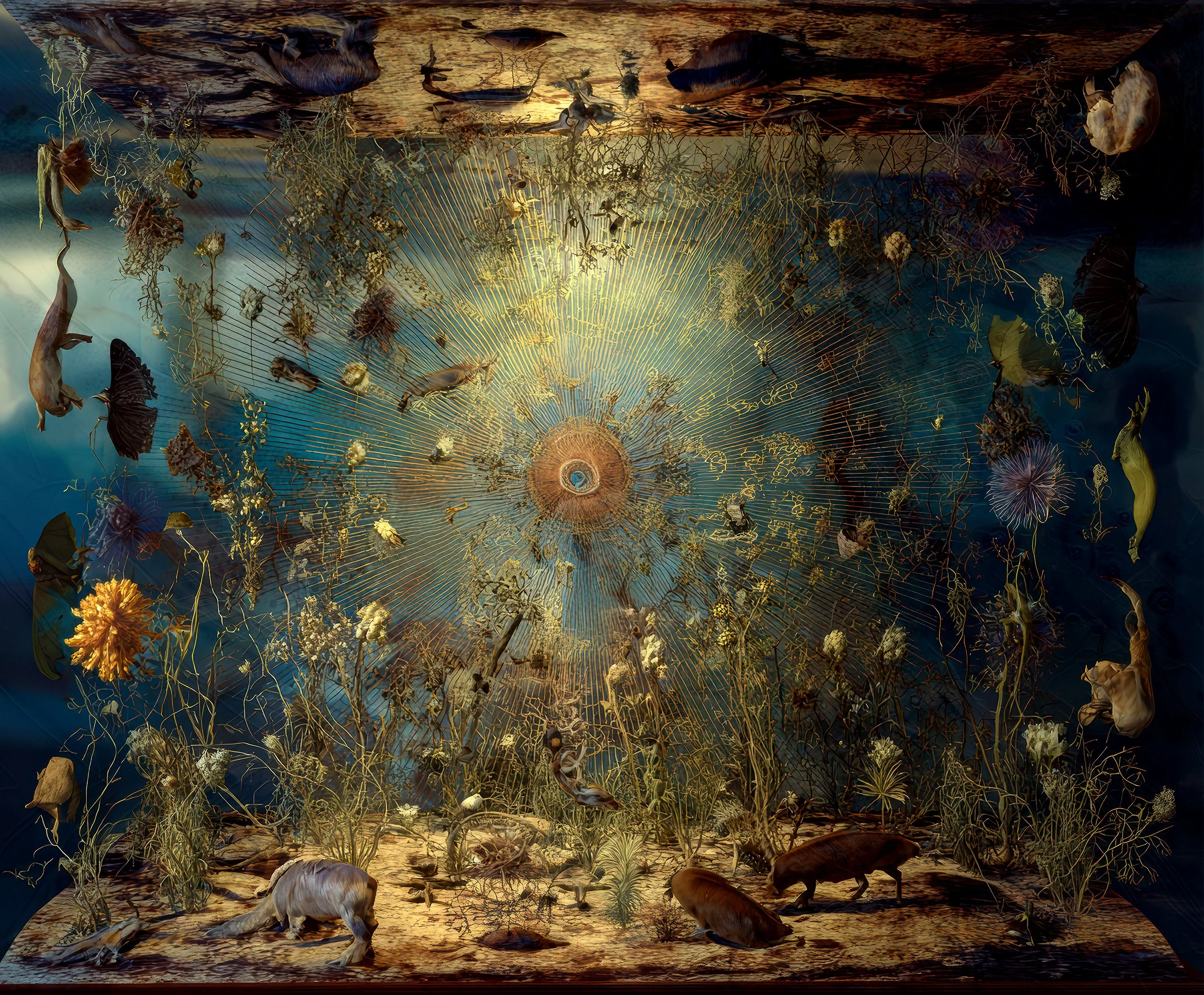
The "Axis Mundi, Third Eye", one of the nine major "blind spots" offering access to the eidetic plains.
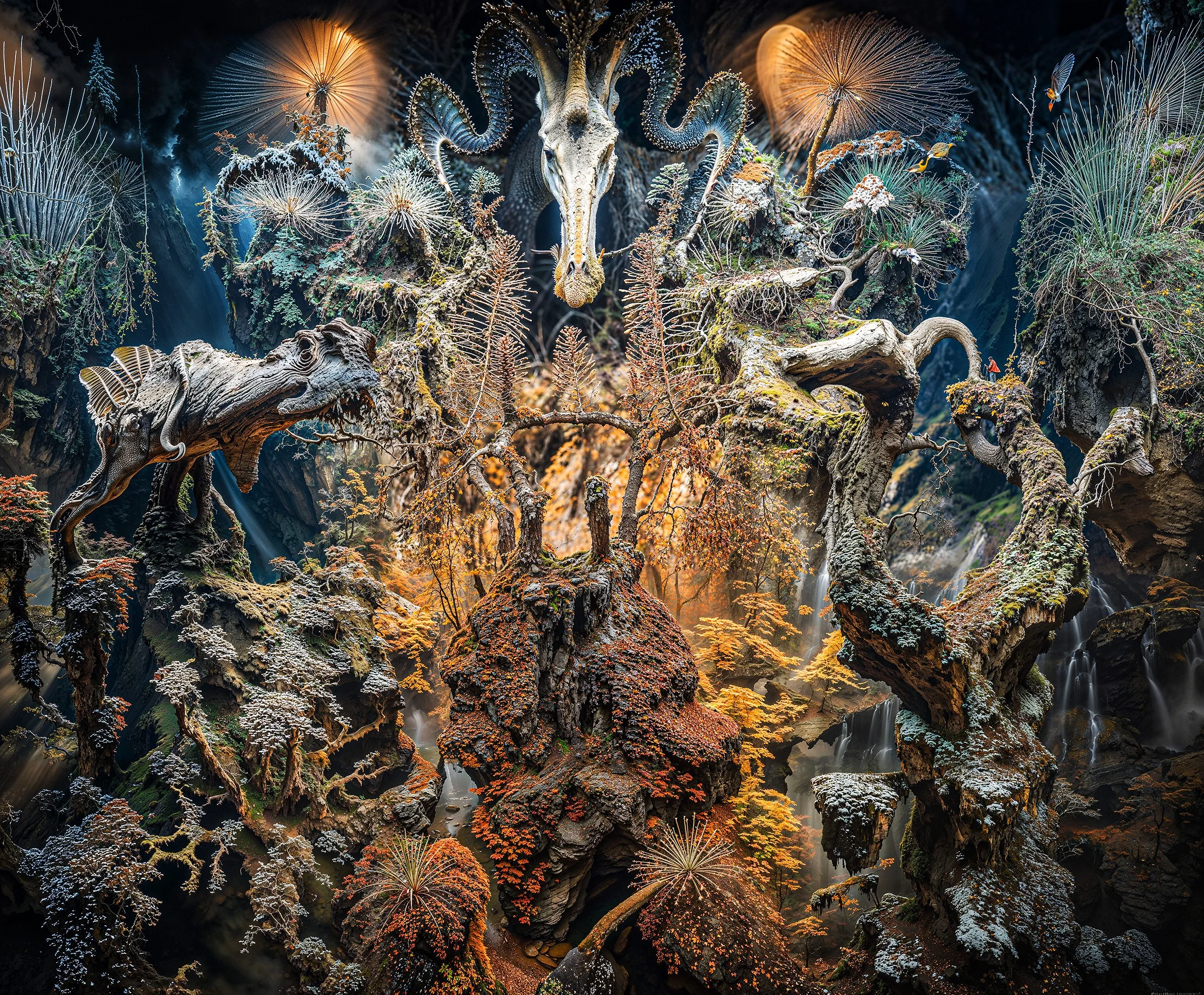
While cacodemonic regeneration has yet to be scientifically documented, imaginal travelers to the eighth clime have returned with accounts of "Rorshachian Trauma" and other hyperviolent acts of creation.
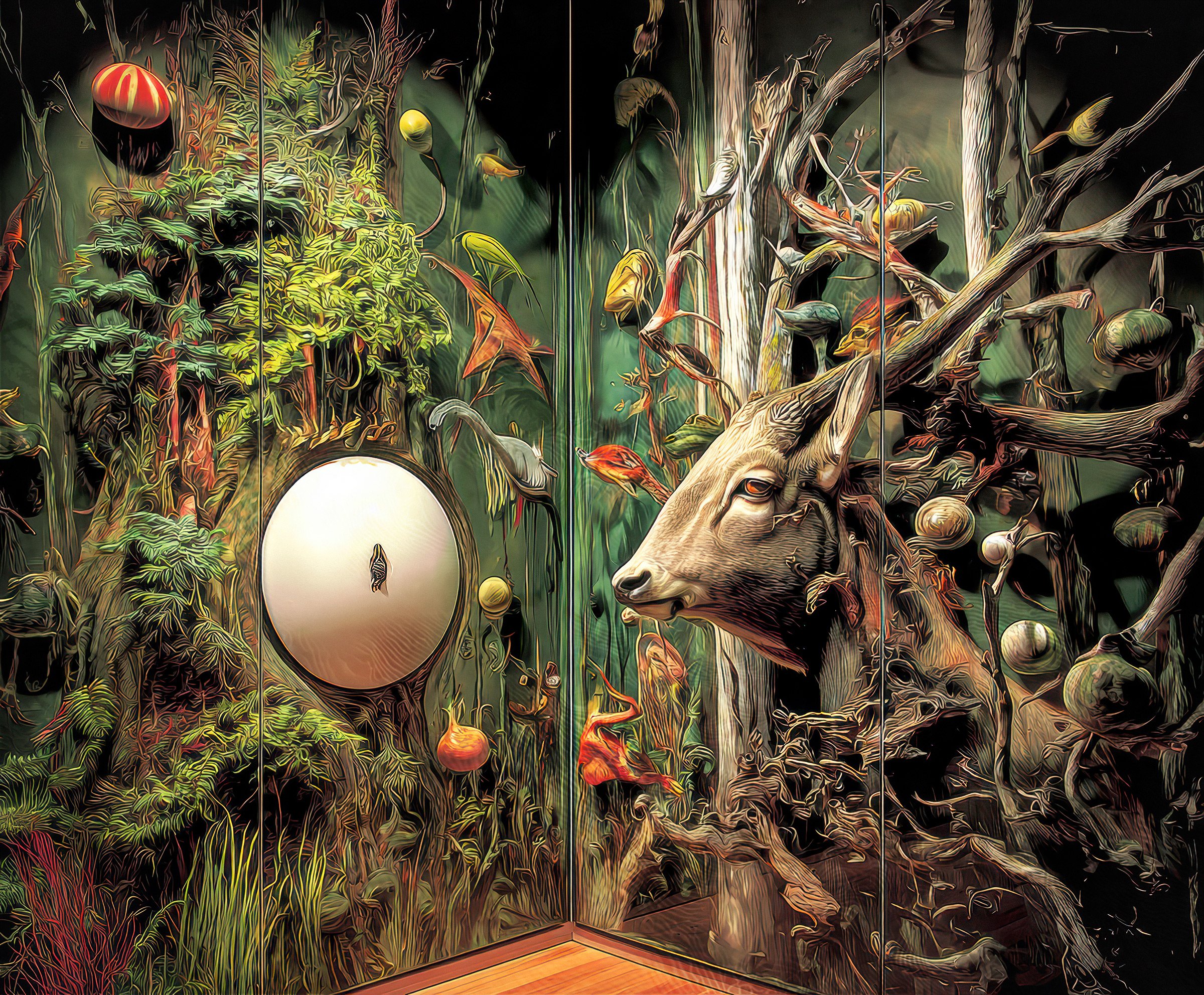
During the "bovid" phase of oneiric transformatio, deciduous horns, if they are in fact horns, interlock and conjoin with the surrounding canopy in a display of split hemispheric ecstasy.
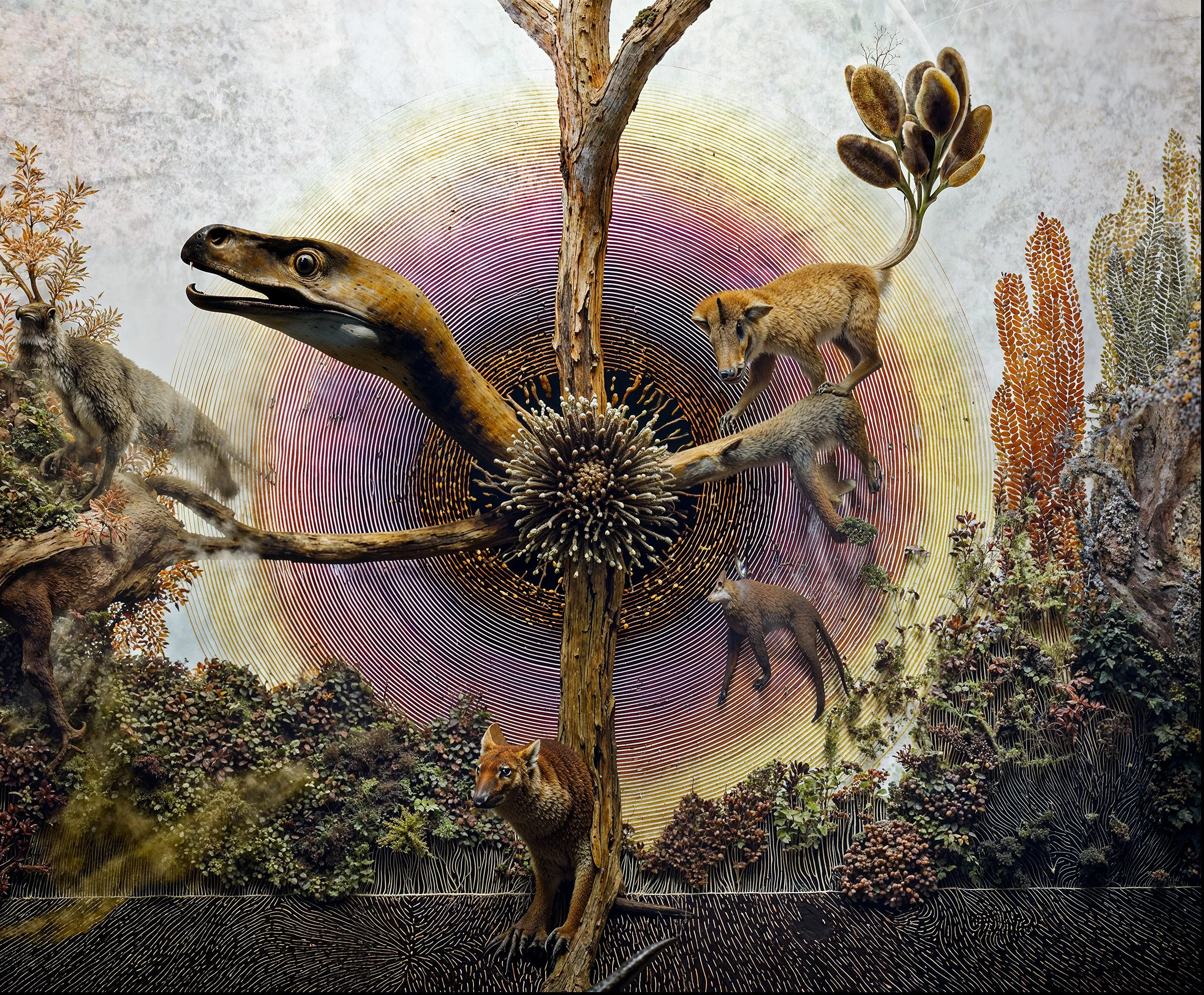
A depiction of incomplete spagyric separation, where tincture and caput mortuum remain suspended in a colloidal intimacy--what today's alchemists continue to call "the uncertain marriage."