Wunderkammern
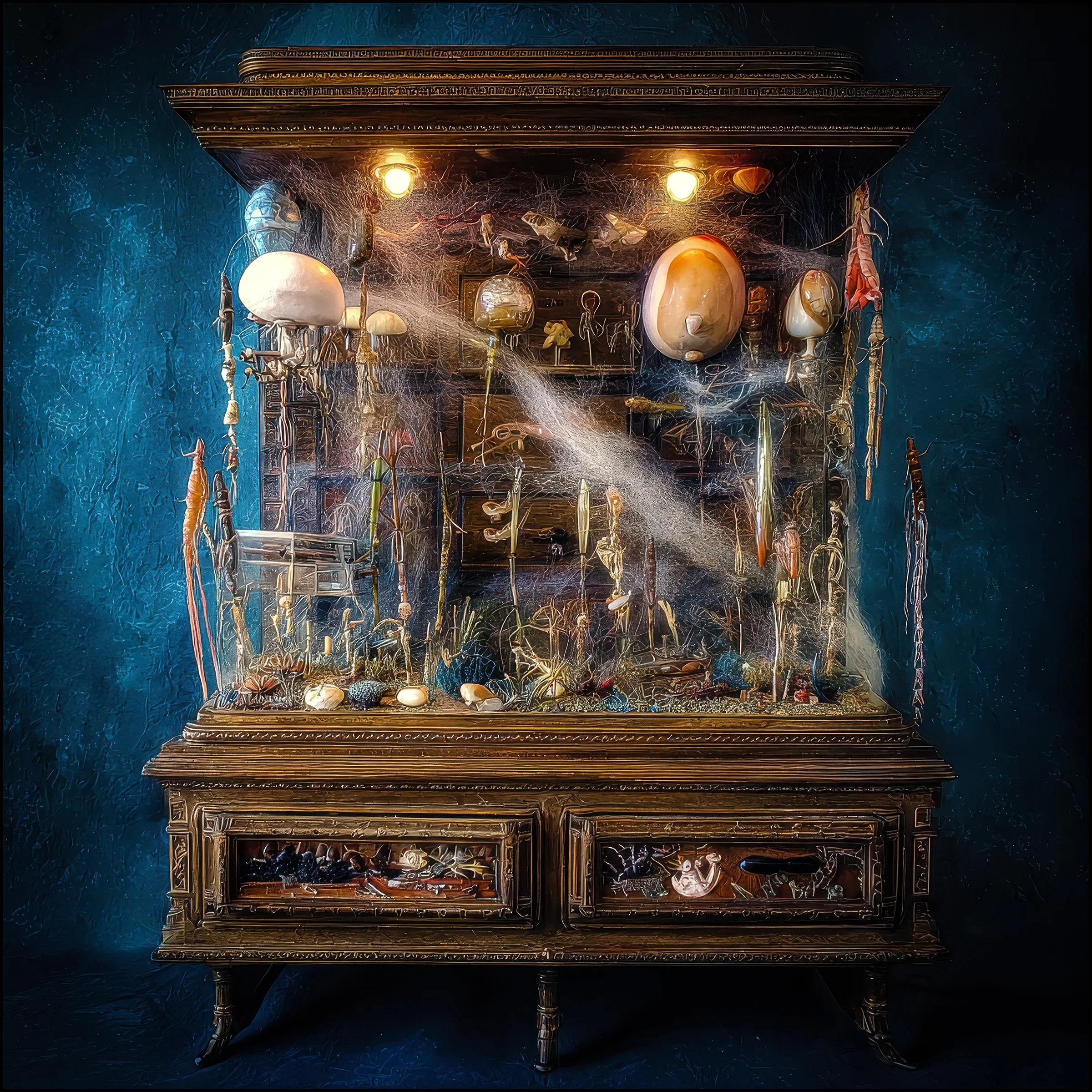
Miss Coralie Venn of Boscastle, angler and spirit-medium, tied each specimen herself as lures for the fish that swam in her "luminiferous ether."
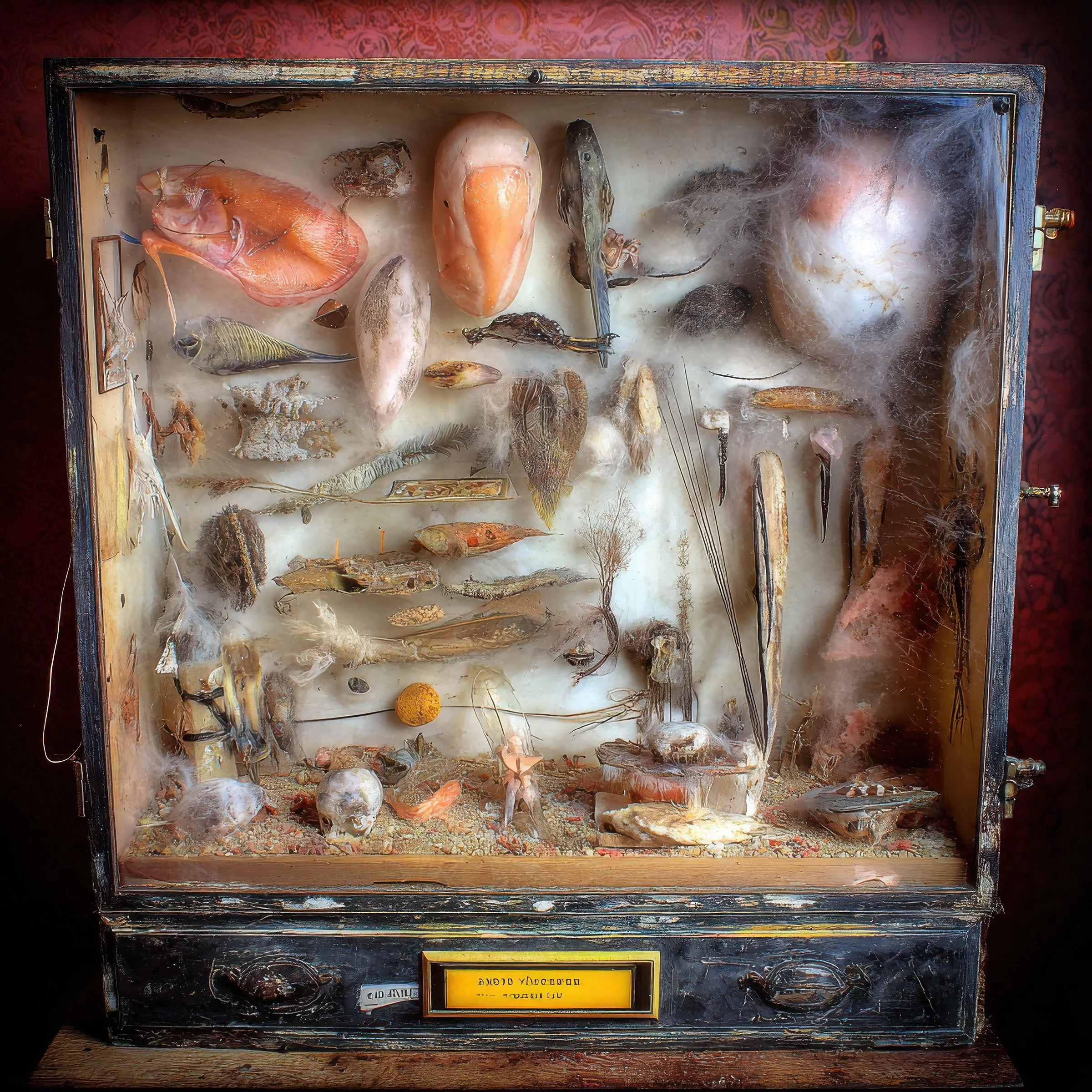
A reliquary used by the Society for the Recovery of Lost Forms.
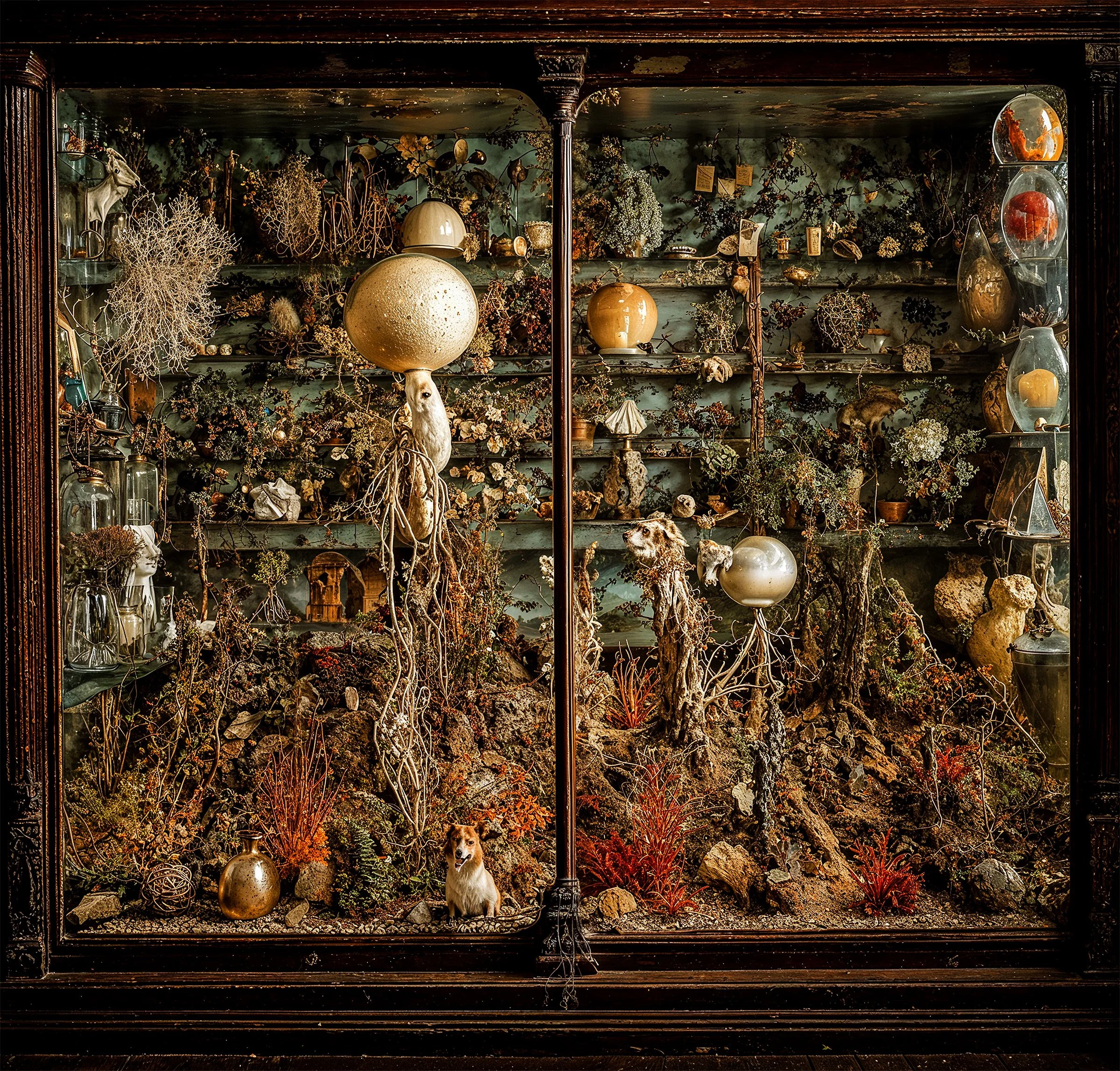
Eggs from moon moth colonies.
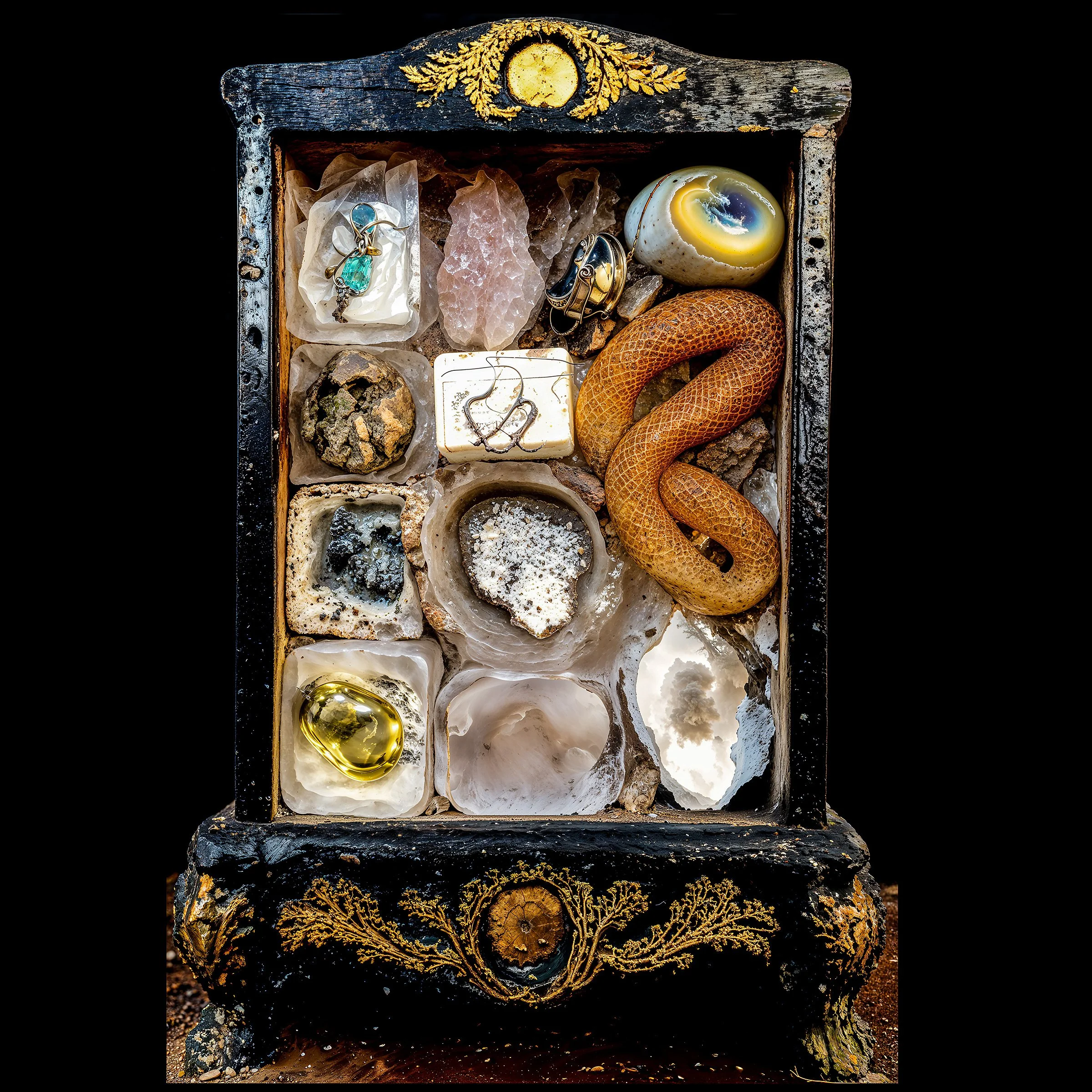
When the Honourable Clementina Ashby-Pole bequeathed the case to the museum in 1903, she stipulated that the iridescent glass eye in the upper corner must never be turned to the wall, since it was the only means left by which her great-grandmother, a minor oracle, could watch her crickets.
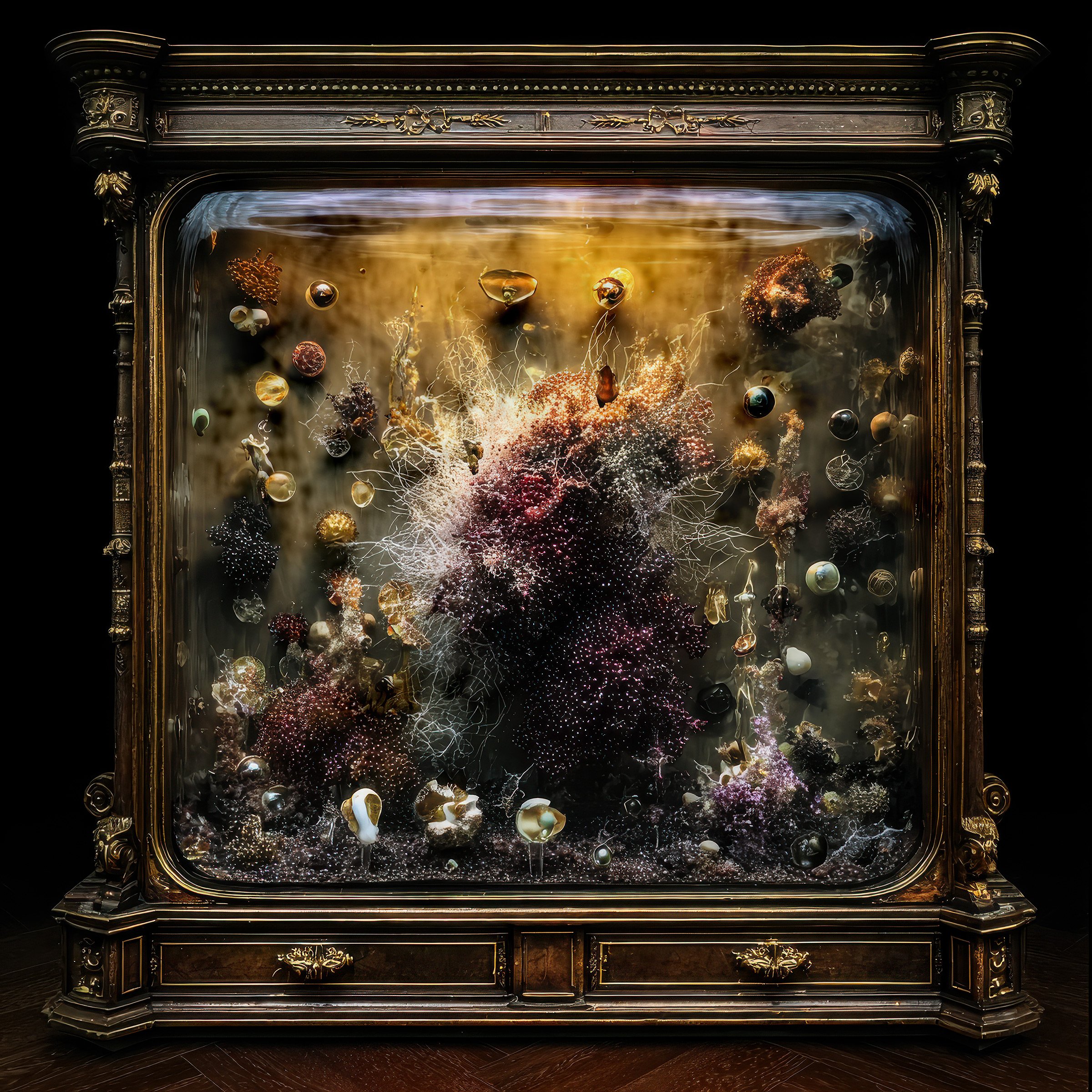
A cabinet of convalescence.
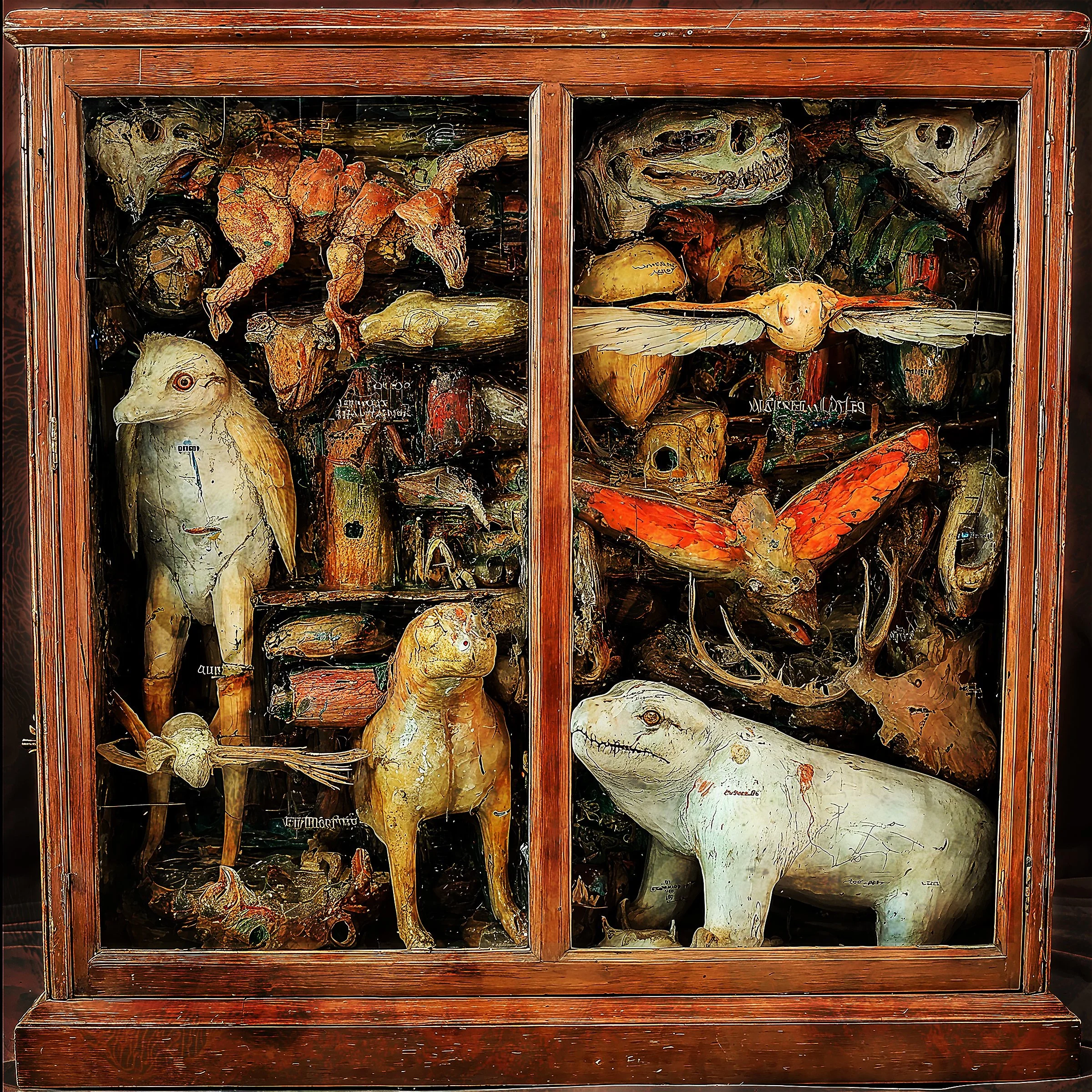
Lord Alphonse III commissioned the pale pig-bear in the lower right compartment as a portrait of his own conscience.
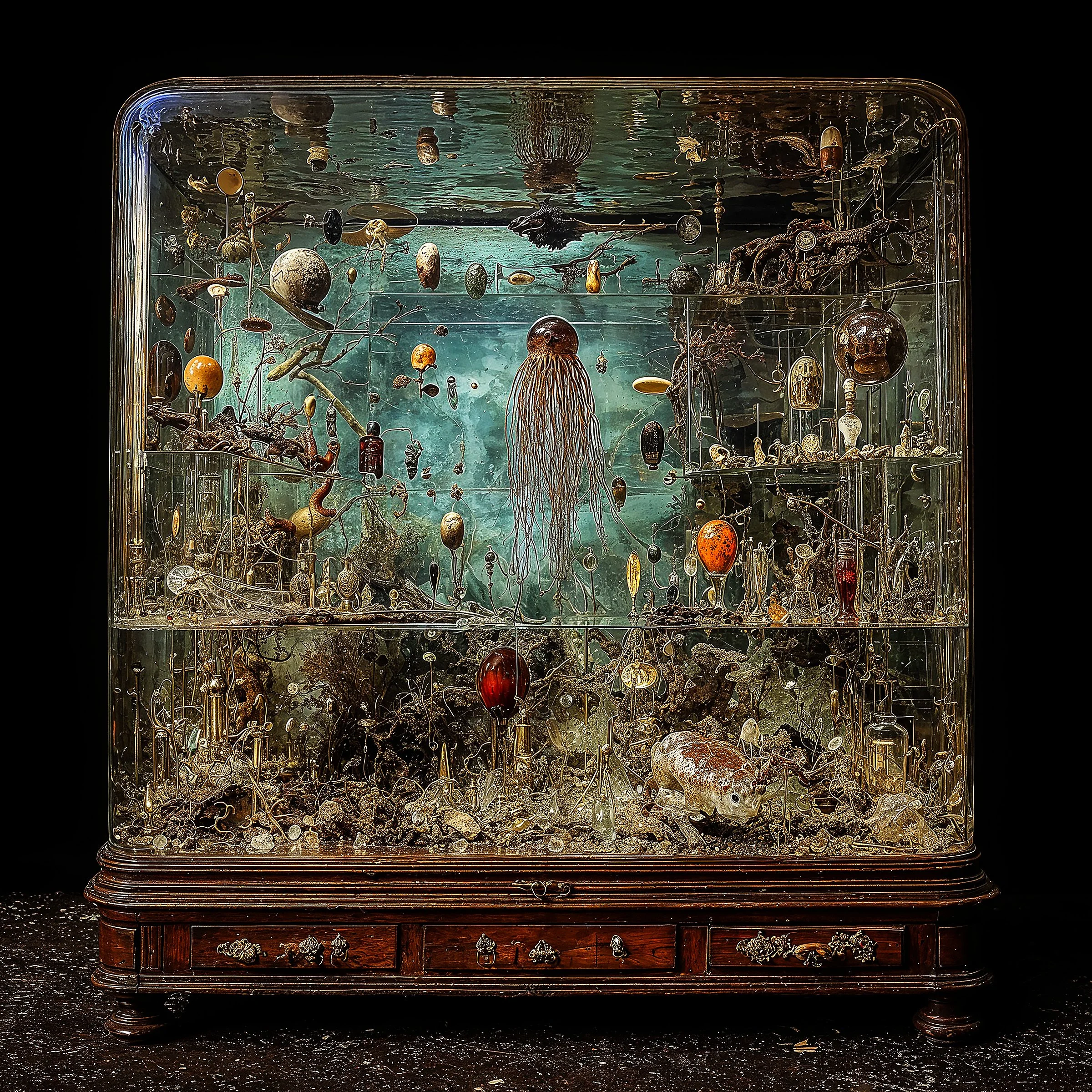
Scale model of the ocean as perceived by Lord Admiral Geoffrey Churt it while nearly drowning off the Azores in 1861.
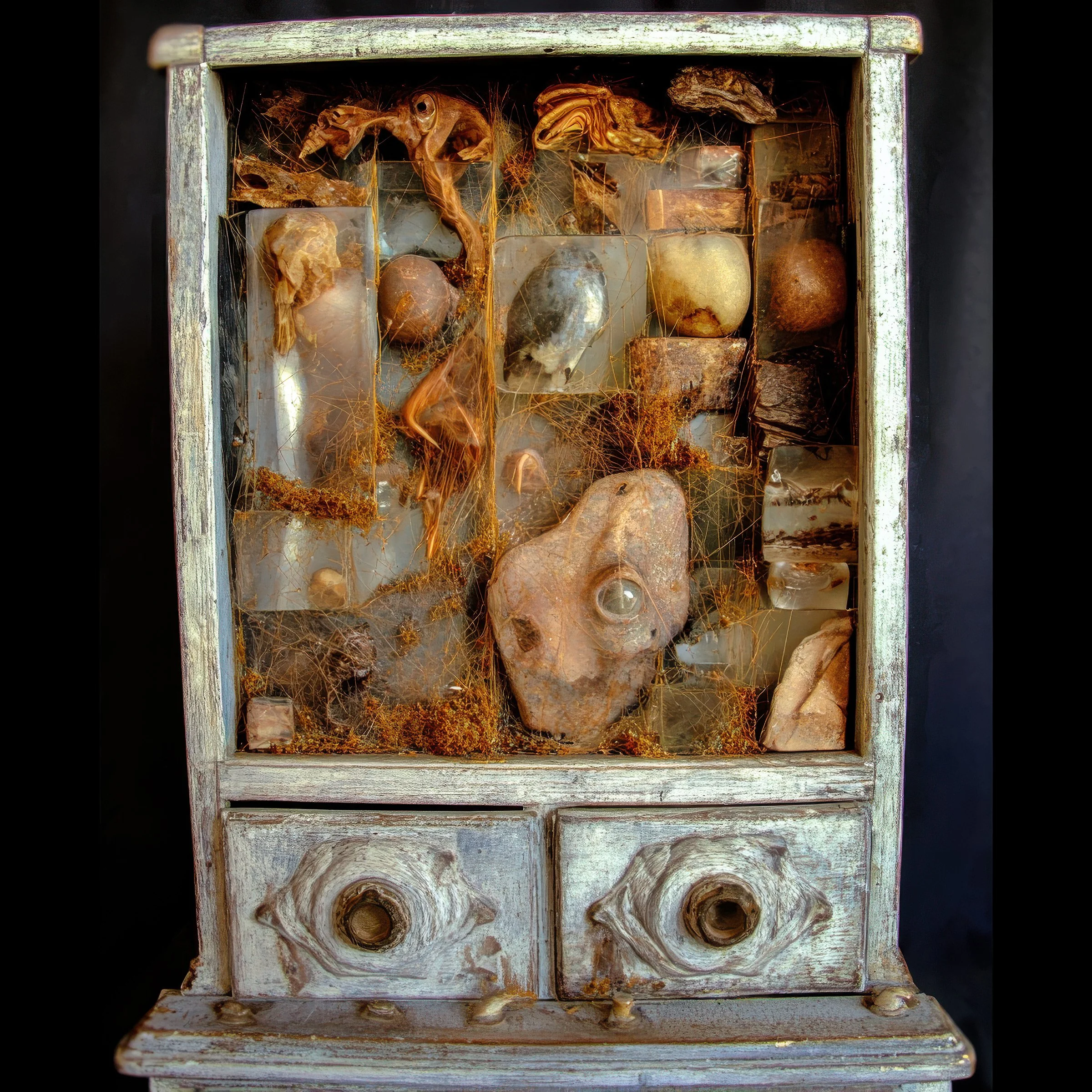
Egg-connoisseur and dowser Lavinia Stroud commissioned this whitewashed case as a nursery for her dream babies.
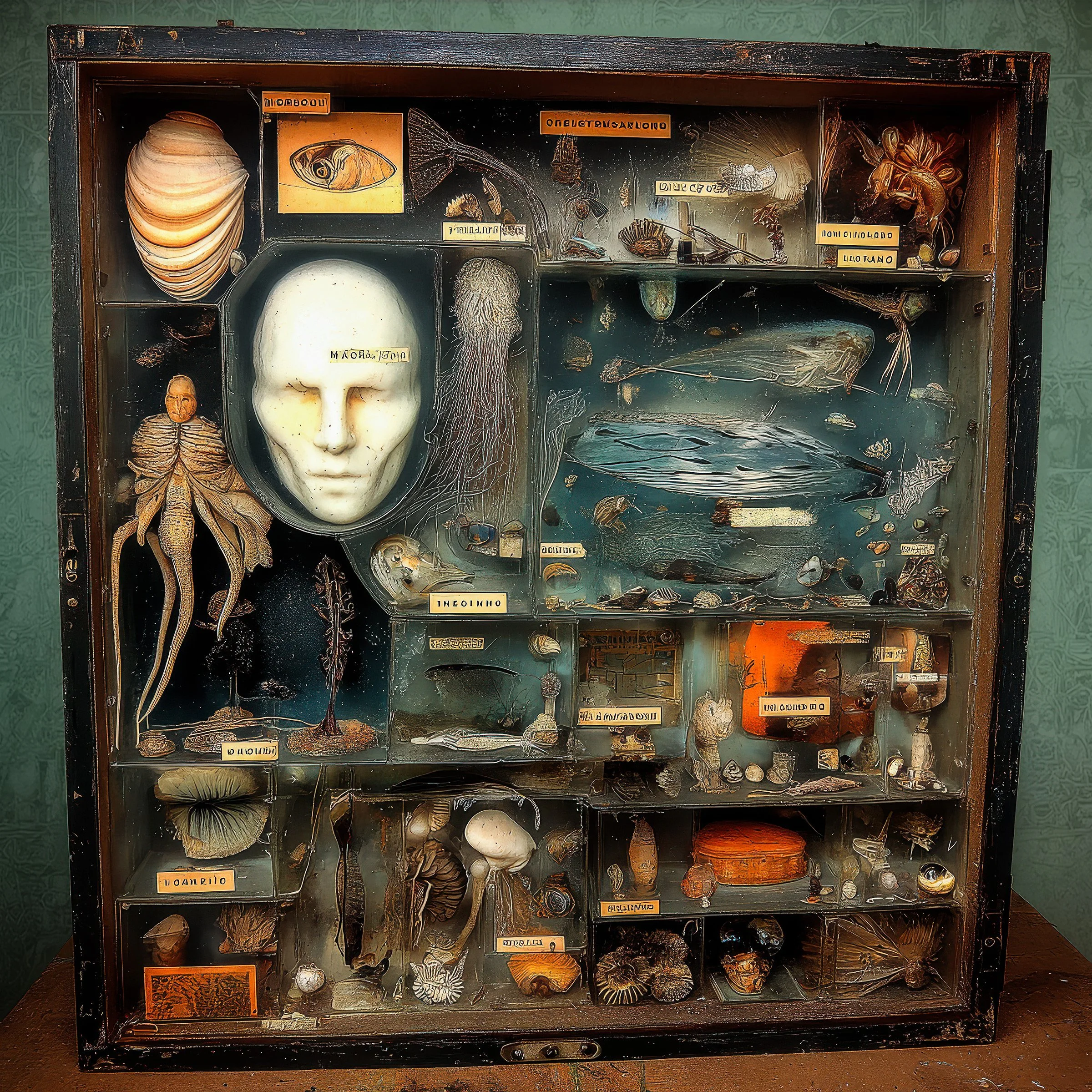
The plaster face in its niche is a life-mask of Professor Ambrose Lychfield, comparative anatomist. It has been known to blink.
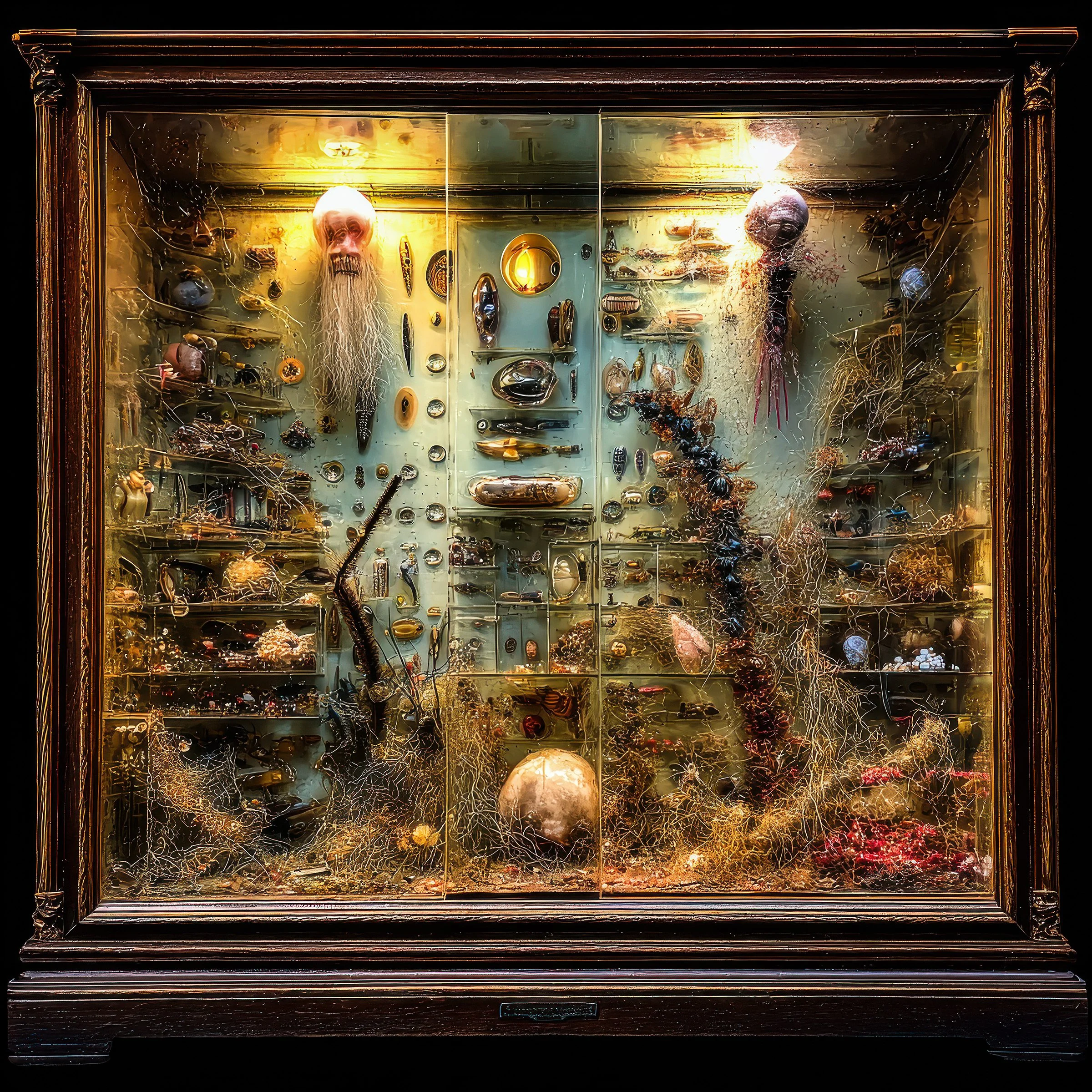
The beaded tendril hanging from the right-hand lamp is the rosary of Sister Perpetua of the Bermondsey Ursulines, who added one black pearl for each nightmare she drove out of the parish children.
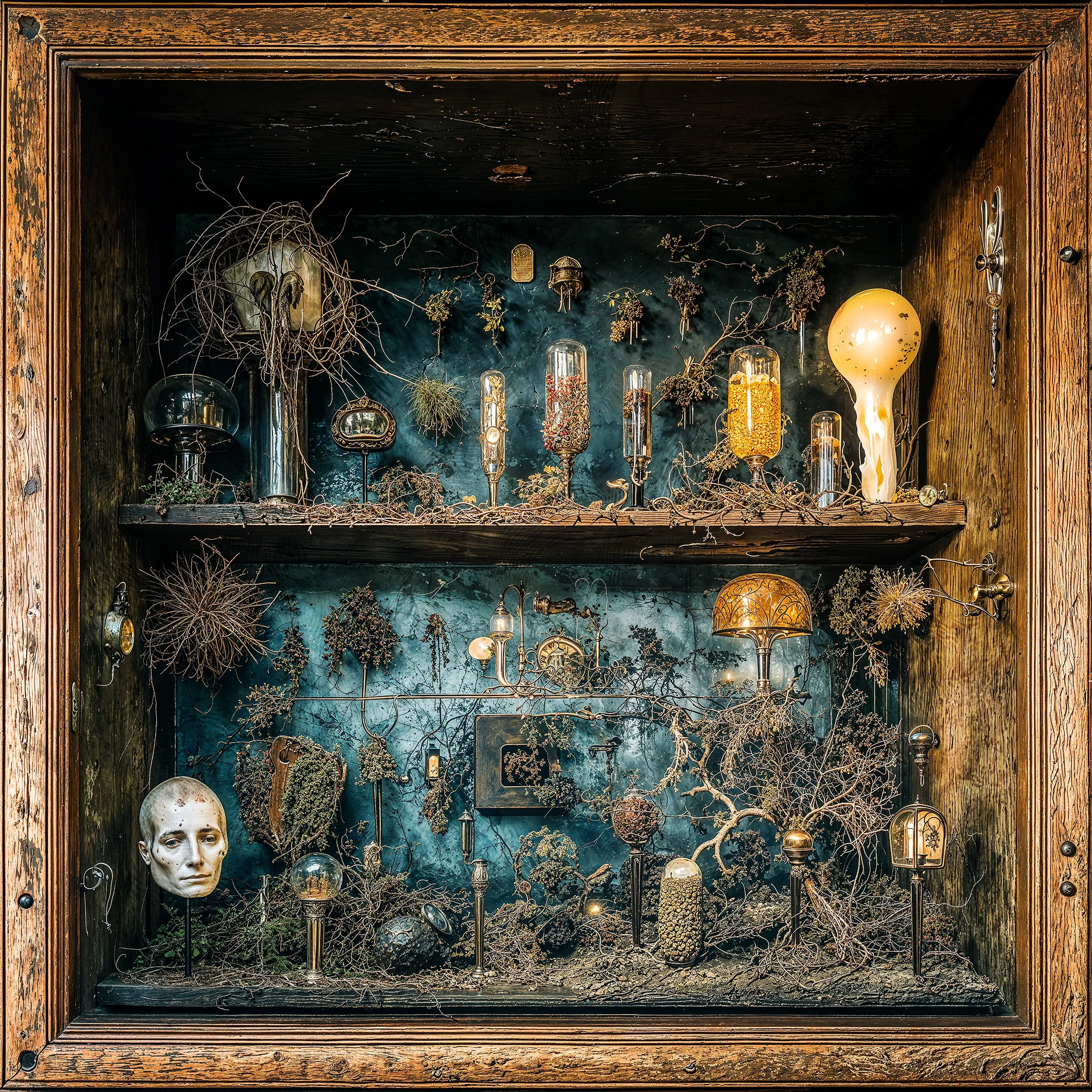
Mushroom lamps installed by the cabinet's second owner, Mrs. Dorothea Fiske, a Spiritualist of the Cheltenham school, who held that gardens of the dead must be lit from below since the newly deceased are shy of being seen from above.
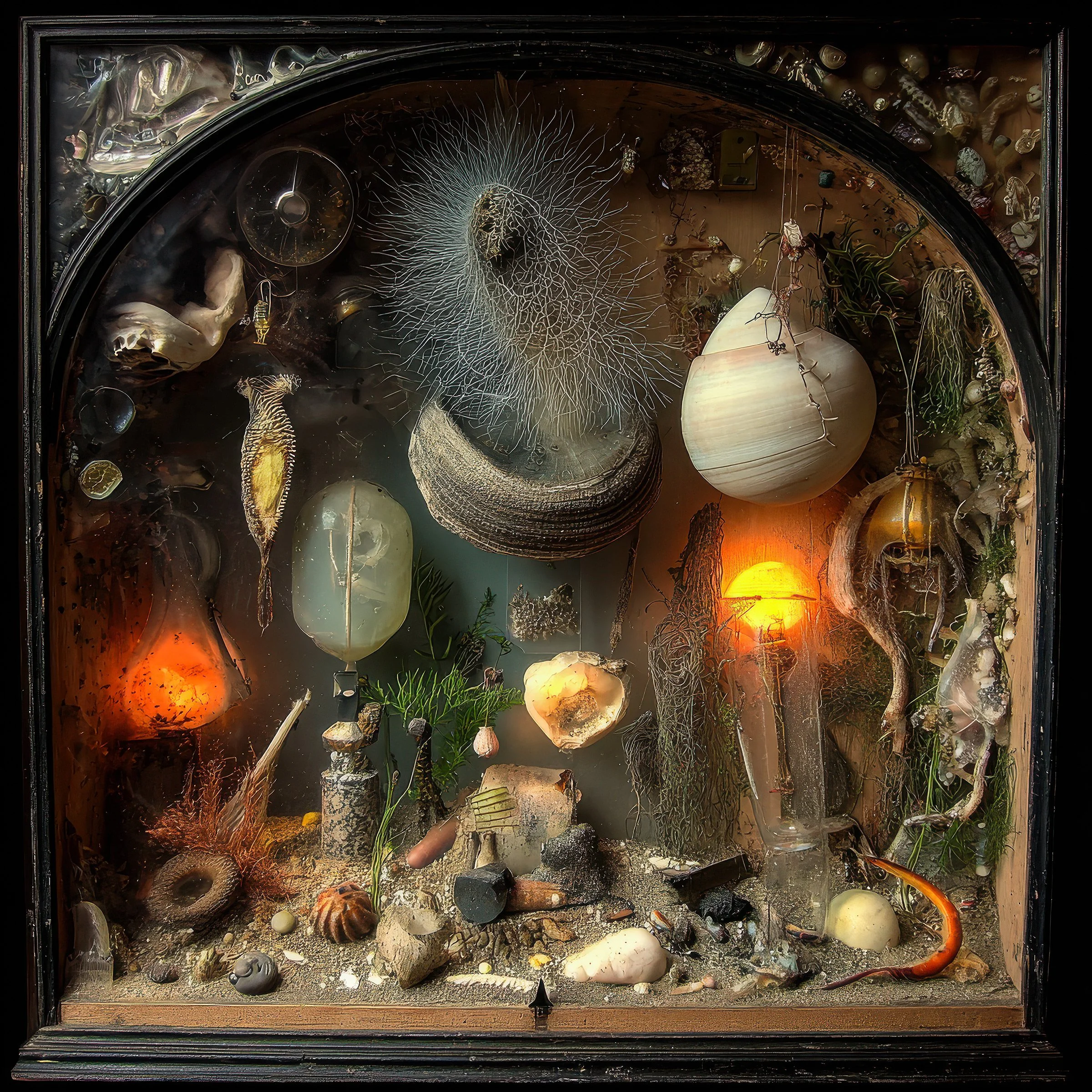
An enclosed arch built to the specifications of Madame Séraphine Tourneur, clairvoyant of Marseille, who claimed that her familiar, the bristling creature enthroned on the ribbed fungus, had been born in the gap between two of her heartbeats.
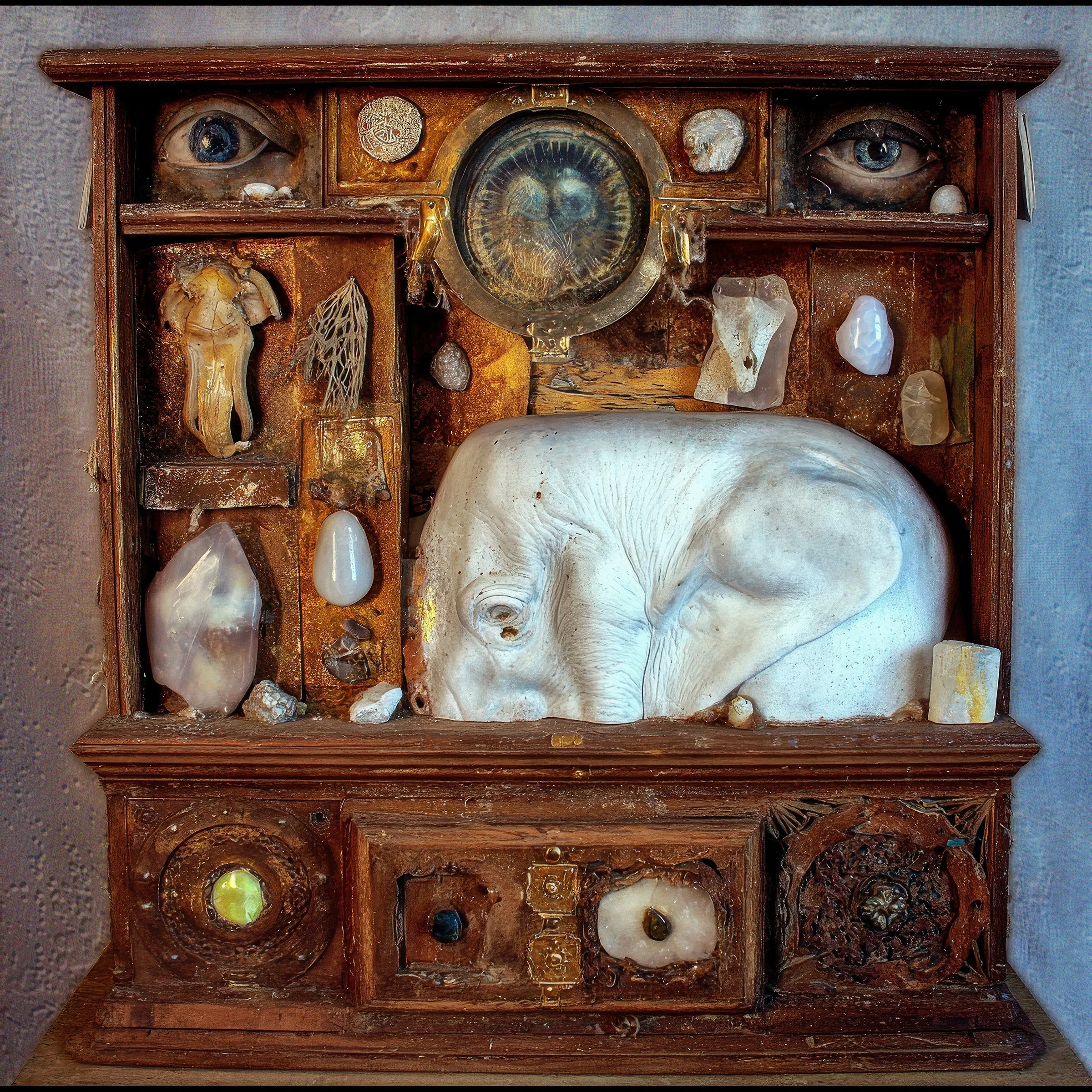
Major Rupert Hallam, retired army surgeon, commissioned the sleeping elephant in Bombay alabaster, into which he sealed his family's memory beads.